FotoDoc
  • Home
  • Contest
    • FotoDoc Photo Contest 2026
      • Rules / SubmissionOPEN!
      • Selected Entries
      • Guidelines
    • FotoDoc Photo Contest 2025 – Winners
    • FotoDoc Photo Contest 2024 – Winners
    • FotoDoc Photo Contest 2023 – Winners
  • Festival
    • FotoDoc Festival 2025
    • FotoDoc Festival 2024
    • FotoDoc Festival 2023
    • FotoDoc Festival 2022
  • About
  • Portuguese (Brazil)
  • English
No Result
View All Result
  • Home
  • Contest
    • FotoDoc Photo Contest 2026
      • Rules / SubmissionOPEN!
      • Selected Entries
      • Guidelines
    • FotoDoc Photo Contest 2025 – Winners
    • FotoDoc Photo Contest 2024 – Winners
    • FotoDoc Photo Contest 2023 – Winners
  • Festival
    • FotoDoc Festival 2025
    • FotoDoc Festival 2024
    • FotoDoc Festival 2023
    • FotoDoc Festival 2022
  • About
  • Portuguese (Brazil)
  • English
No Result
View All Result
FotoDoc
No Result
View All Result
Pewenche Transhumance

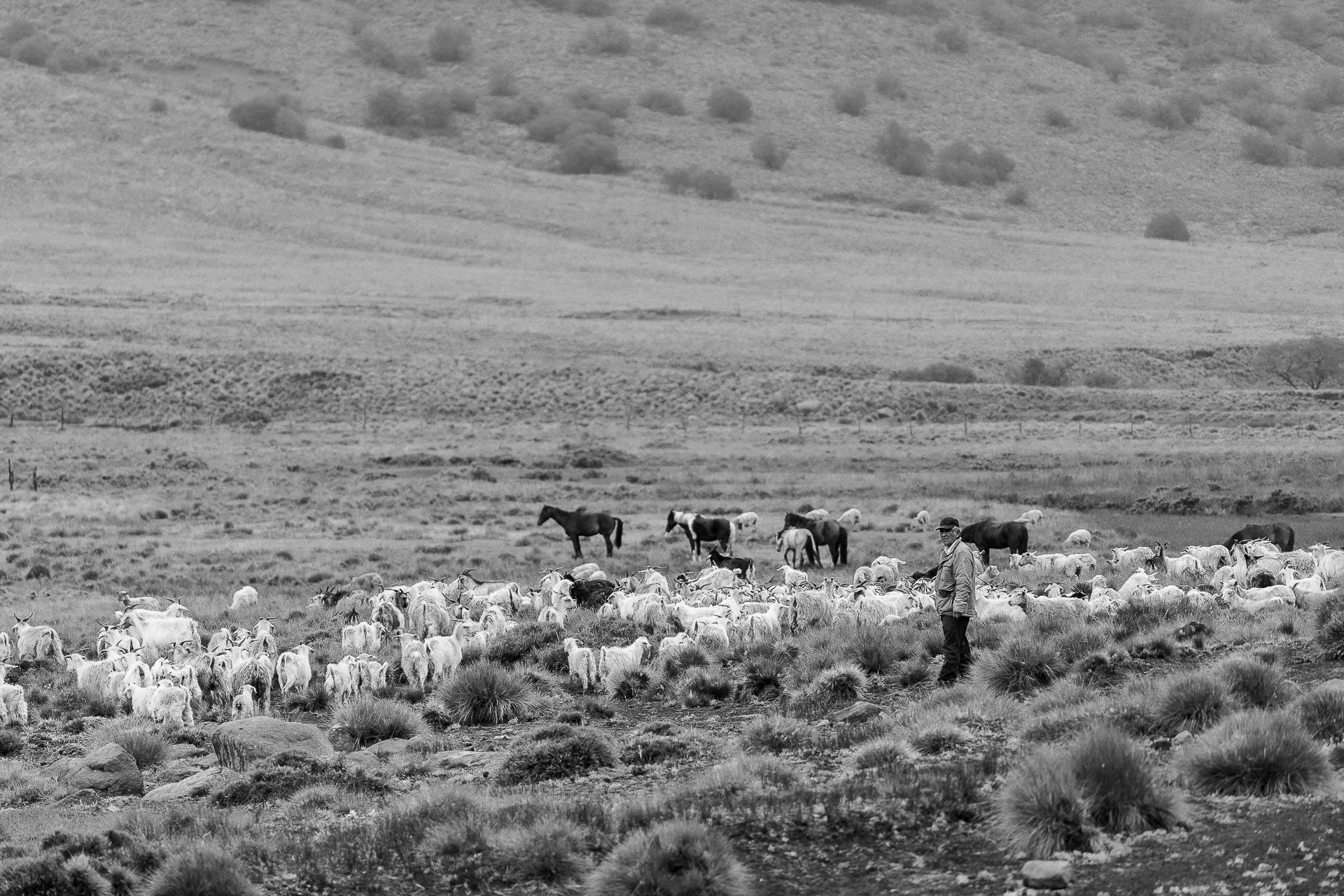
Don Domingo herding animals to the higher grasslands.

Pewenche Transhumance

Tomas HernandezbyTomas Hernandez
13 de March de 2026
in Portfolio

Selected in Prêmio Portfólio FotoDoc 2026

A case of human ecology, climate justice, and food sovereignty.
Transhumance is a seasonal practice where families move livestock between grazing areas. For the Pewenche-Mapuche people of the Patagonian Andes between Chile and Argentina-it reflects a deep relationship with the land and the Pewen (monkey-puzzle tree).

In winter, families live in lower valleys. By mid-December, as snow melts, they guide their herds to highland pastures called veranadas for summer grazing. In autumn they descend again, continuing a cycle that has shaped Pewenche life for generations.

This practice is a living system of reciprocity with nature. People, animals, grass, water, and weather move within the same regenerative rhythm, allowing ecosystems to recover while sustaining livelihoods.

Climate change now threatens this balance. Rising temperatures, water scarcity, and economic pressures put a culture built on long-term adaptation at risk, despite Indigenous communities contributing almost nothing to global emissions.

Around 200 million people worldwide depend on pastoralism and transhumance. These systems provide low-impact food while supporting ecosystems: maintaining grasslands, reducing wildfire risk, improving soil health, storing carbon, and protecting biodiversity.

As droughts, warming, and shifting seasons disrupt grazing cycles, both rural livelihoods and food security are at risk. The loss of transhumance would not only erase a cultural tradition, it would increase risks of food insecurity, climate migration, and ecological instability.

What is happening here is not an exception.
It is a glimpse of a future approaching faster than we are willing to admit.
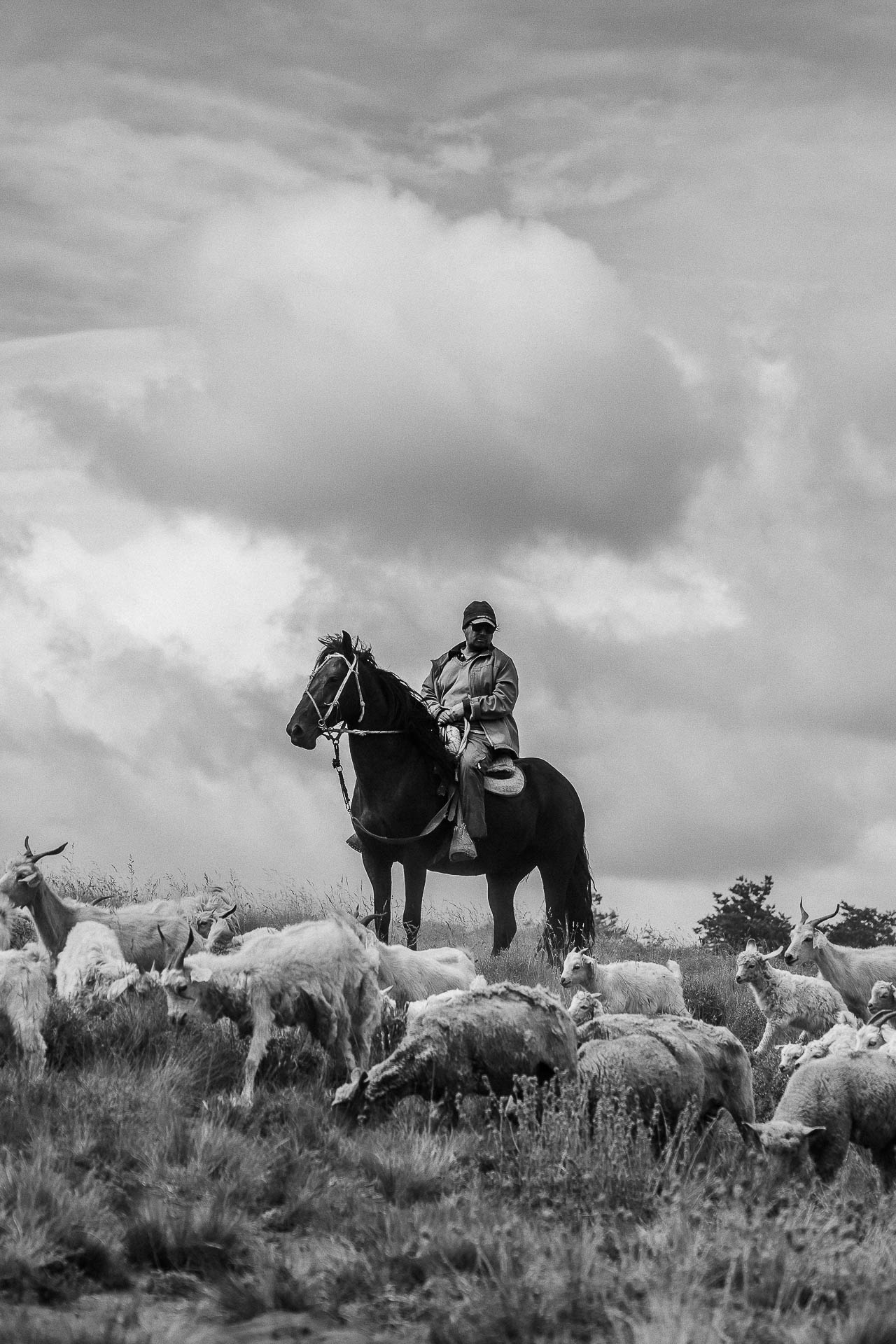
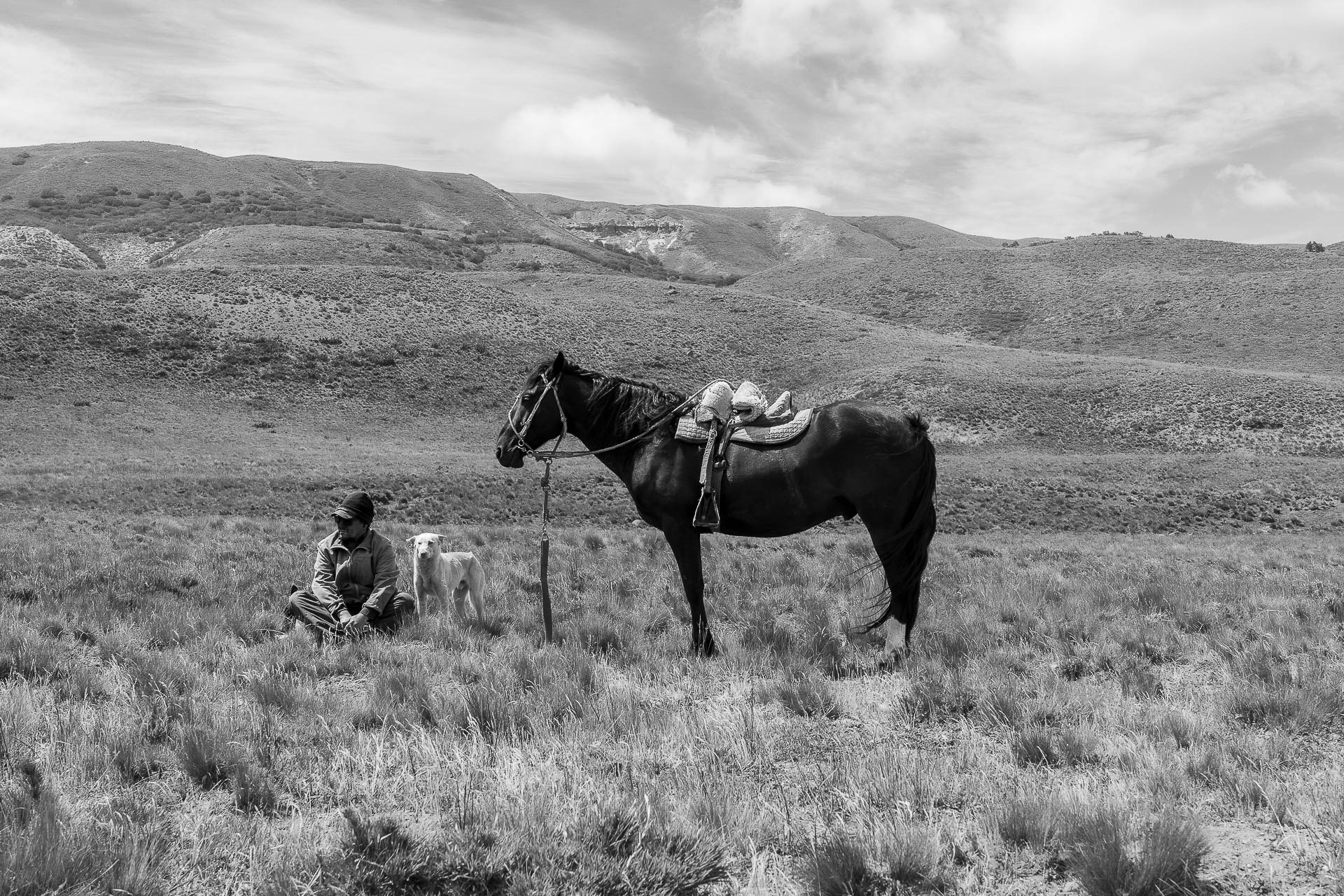
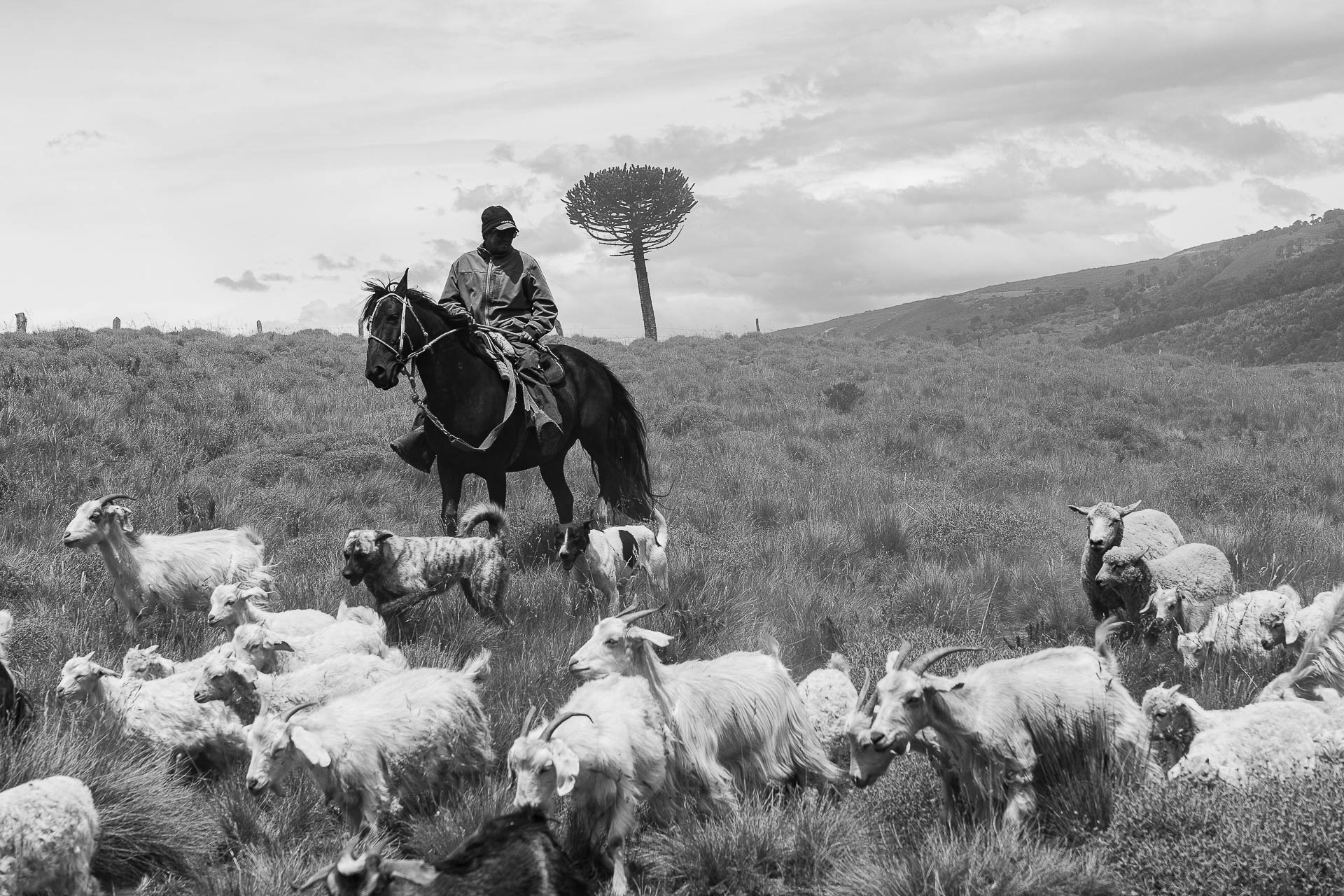
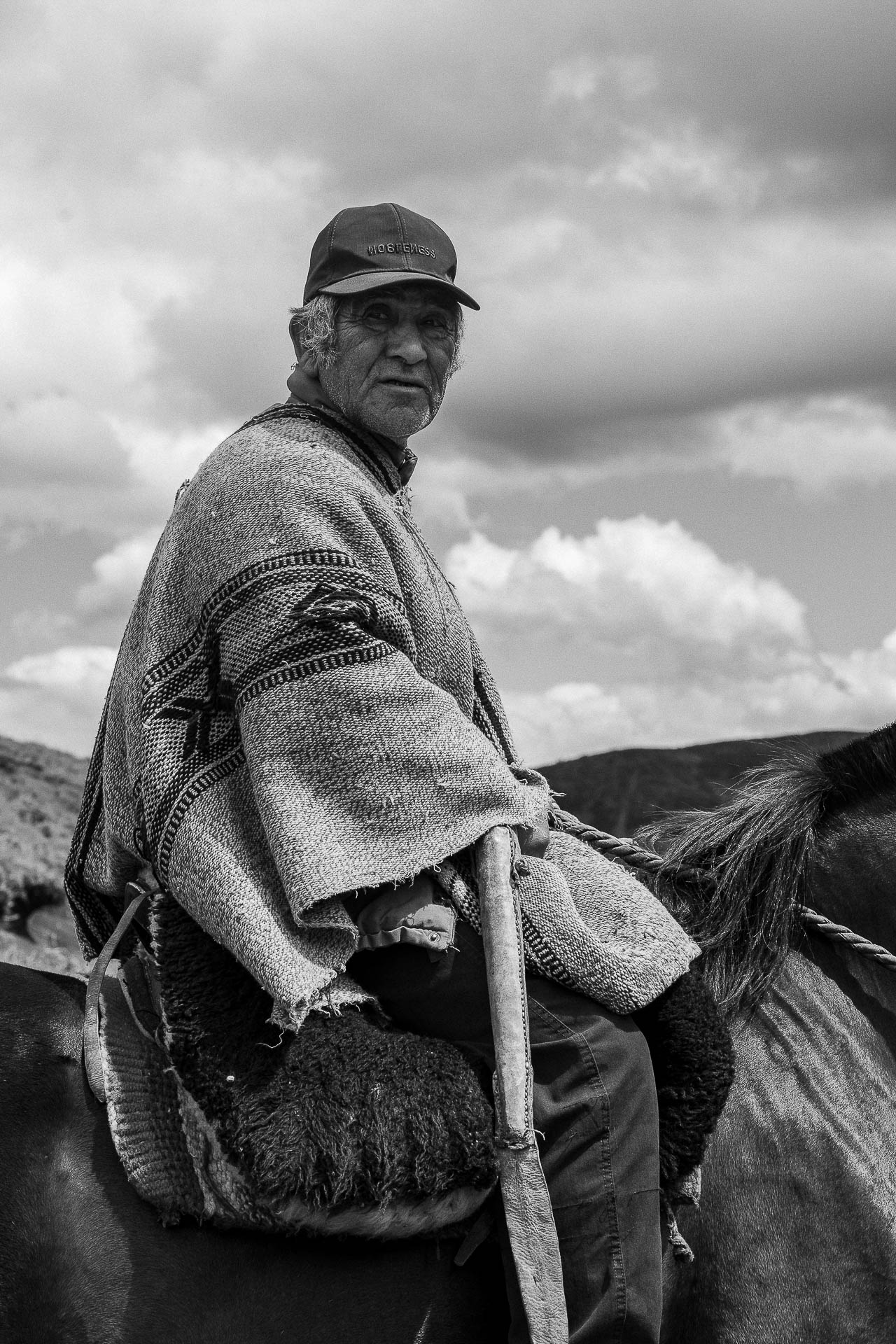
Miguel, always watching and taking care of the animals on their way to the higher lands.
Miguel and his horse resting halfway through the route. It takes 6 hours to reach the Veranada outpost.
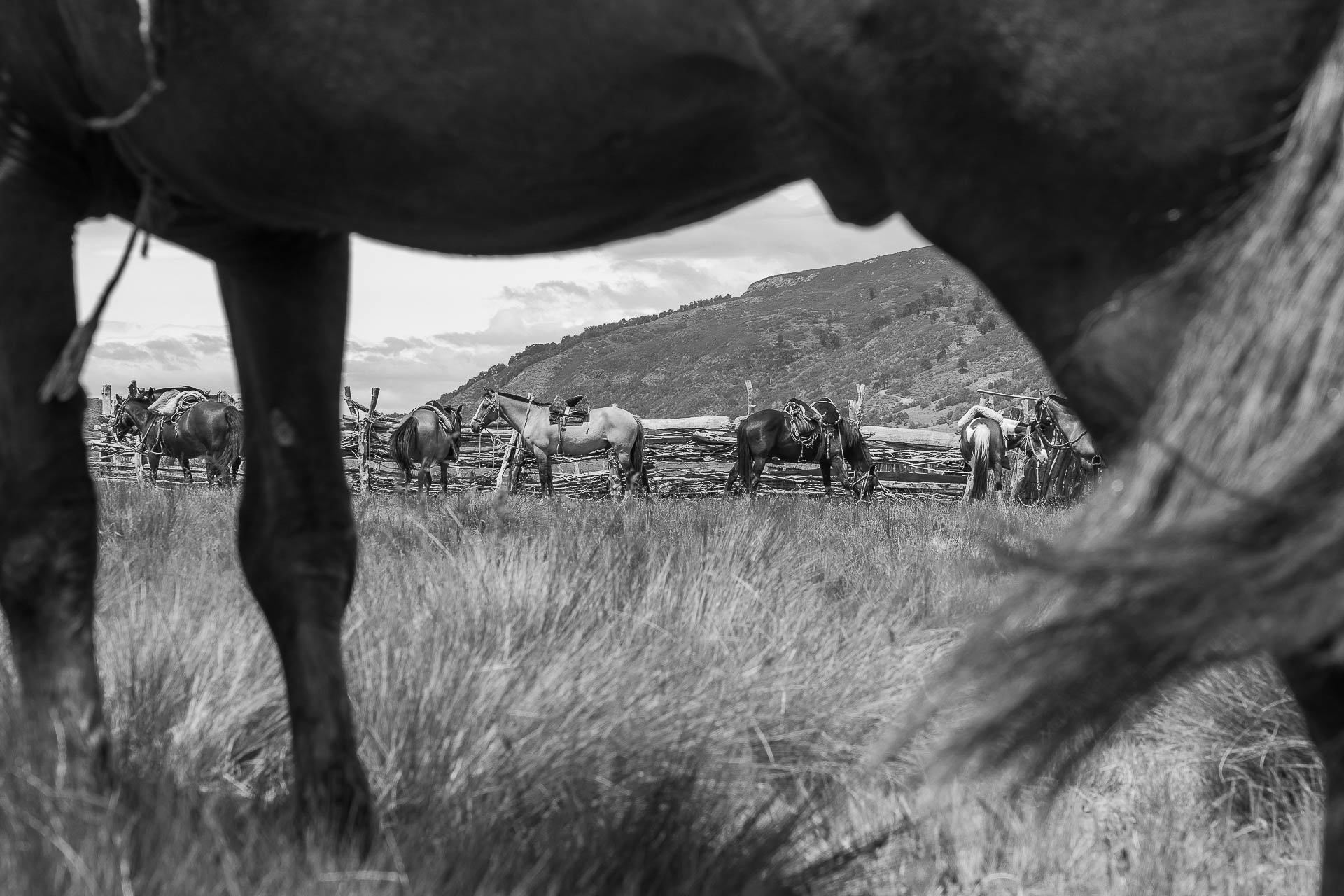
Horses resting.
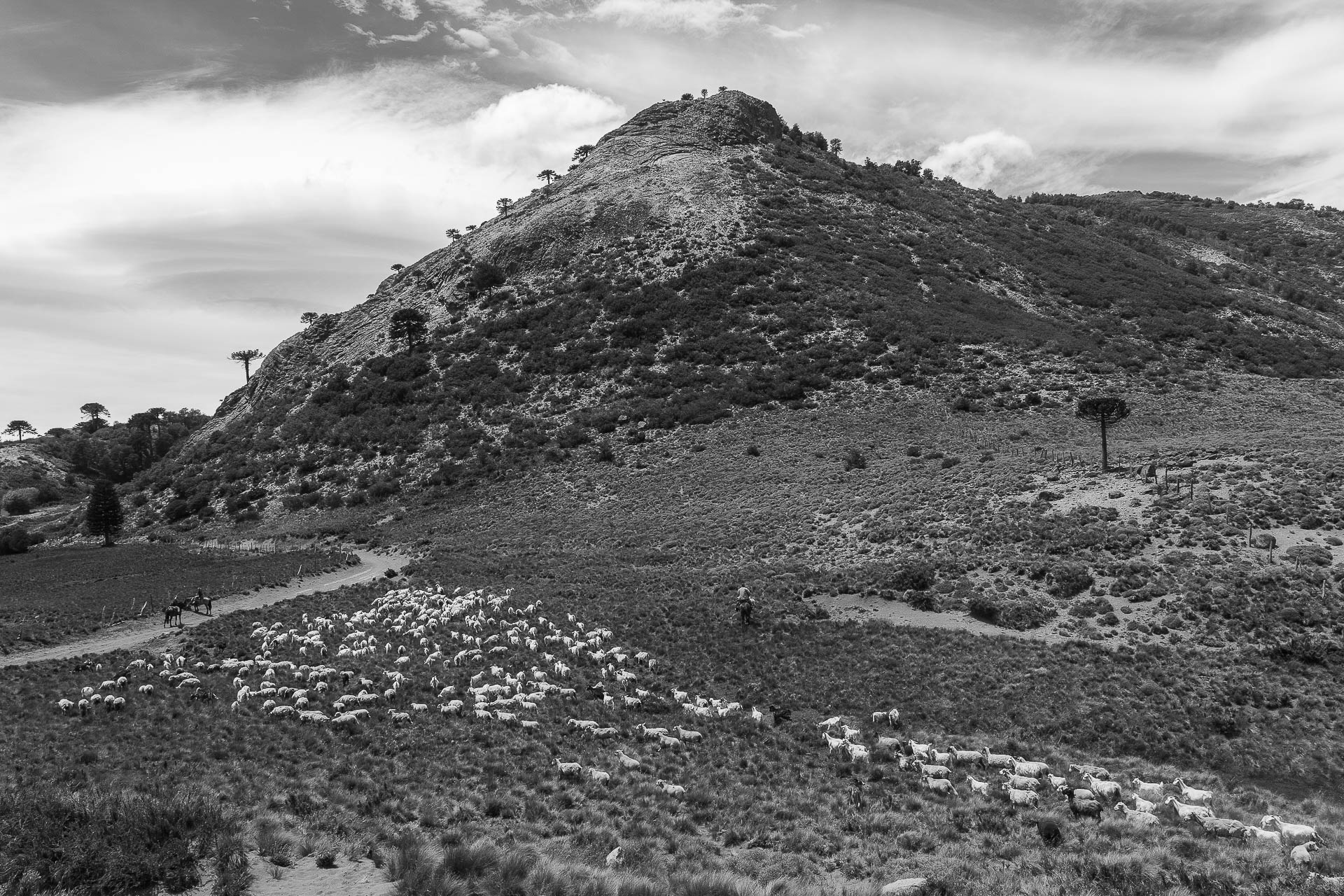
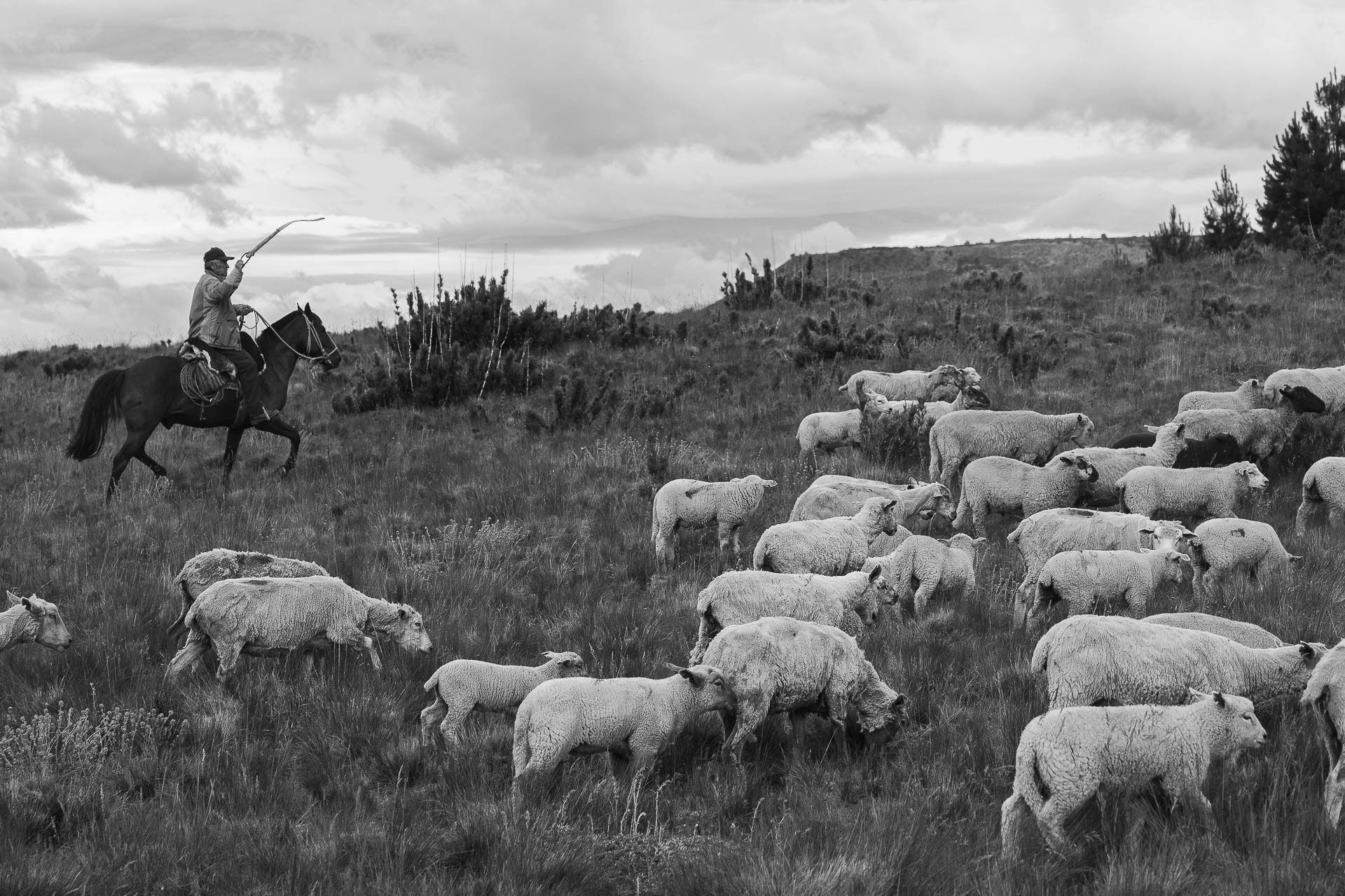
I broader image of the herding to the Veranada. This is a synchronized work between dogs, horses and humans.
Miguel, the last stretch is the hardest for the younger sheep and goats.
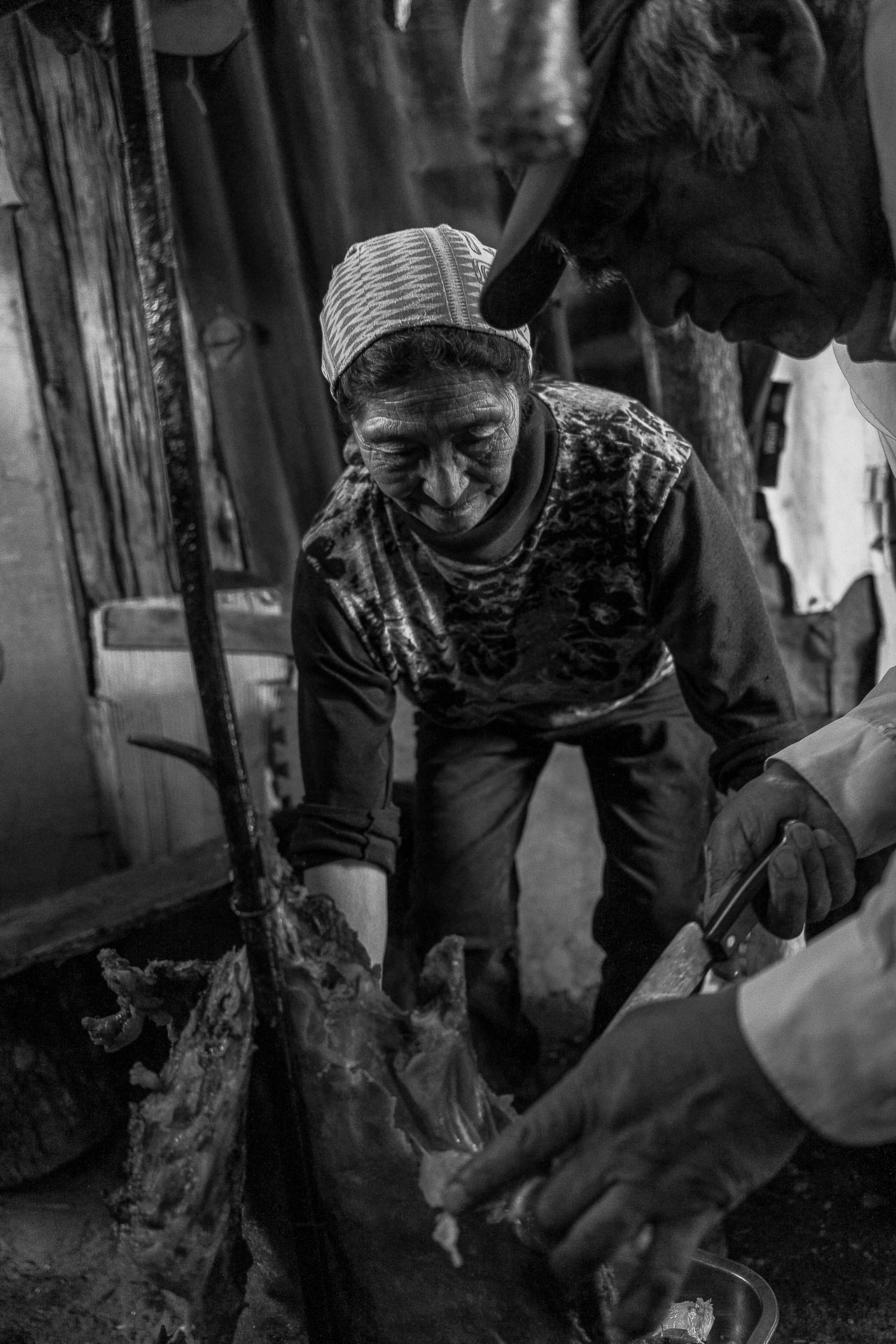
Finally at la Veranada outpost. Domingo and Fresia prepare a barbecue to celebrate the arrival of animals and people.
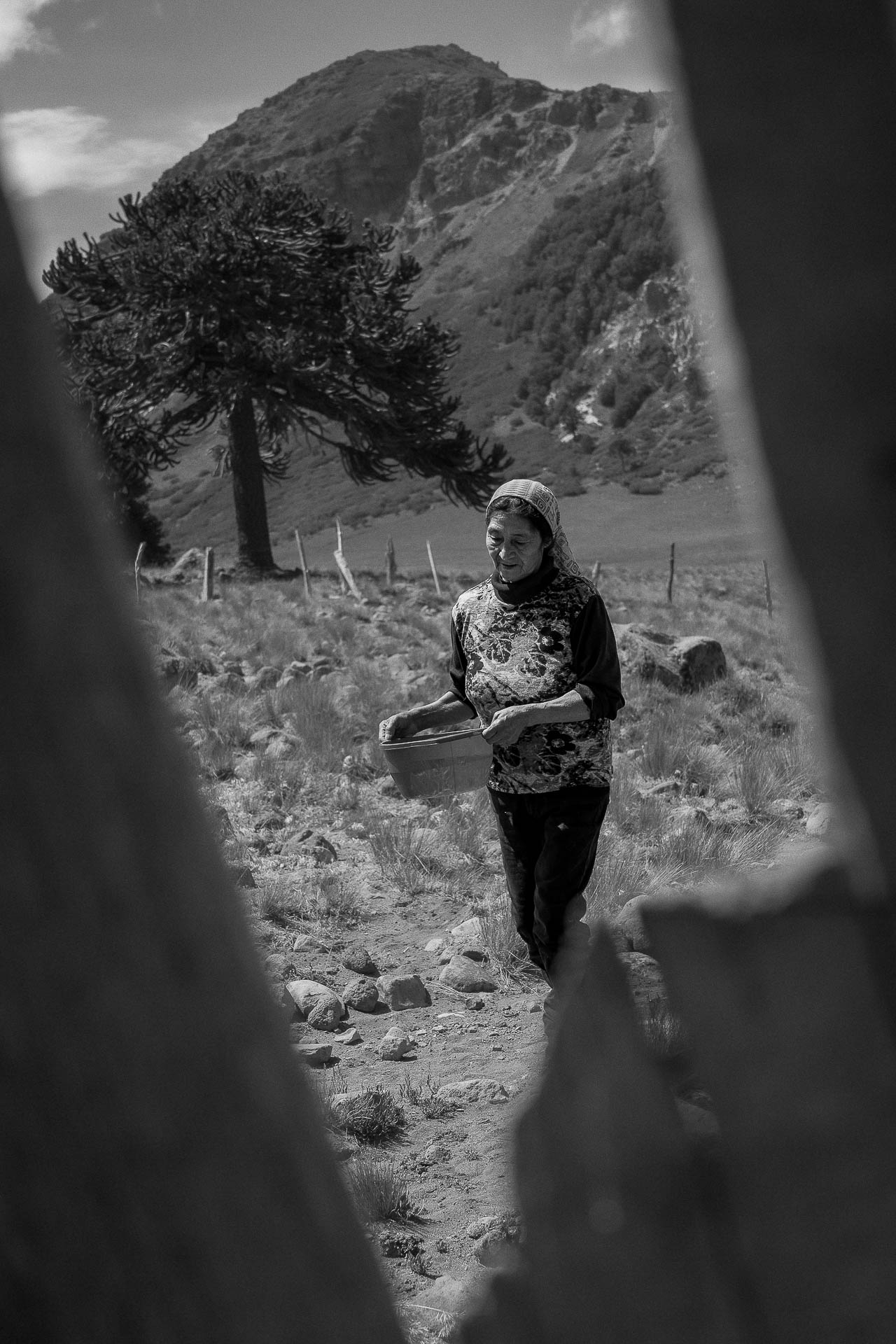
Fresia collects water from the stream nearby. There is no piping nor electricity at la Veranada where they spend 5 months each year.
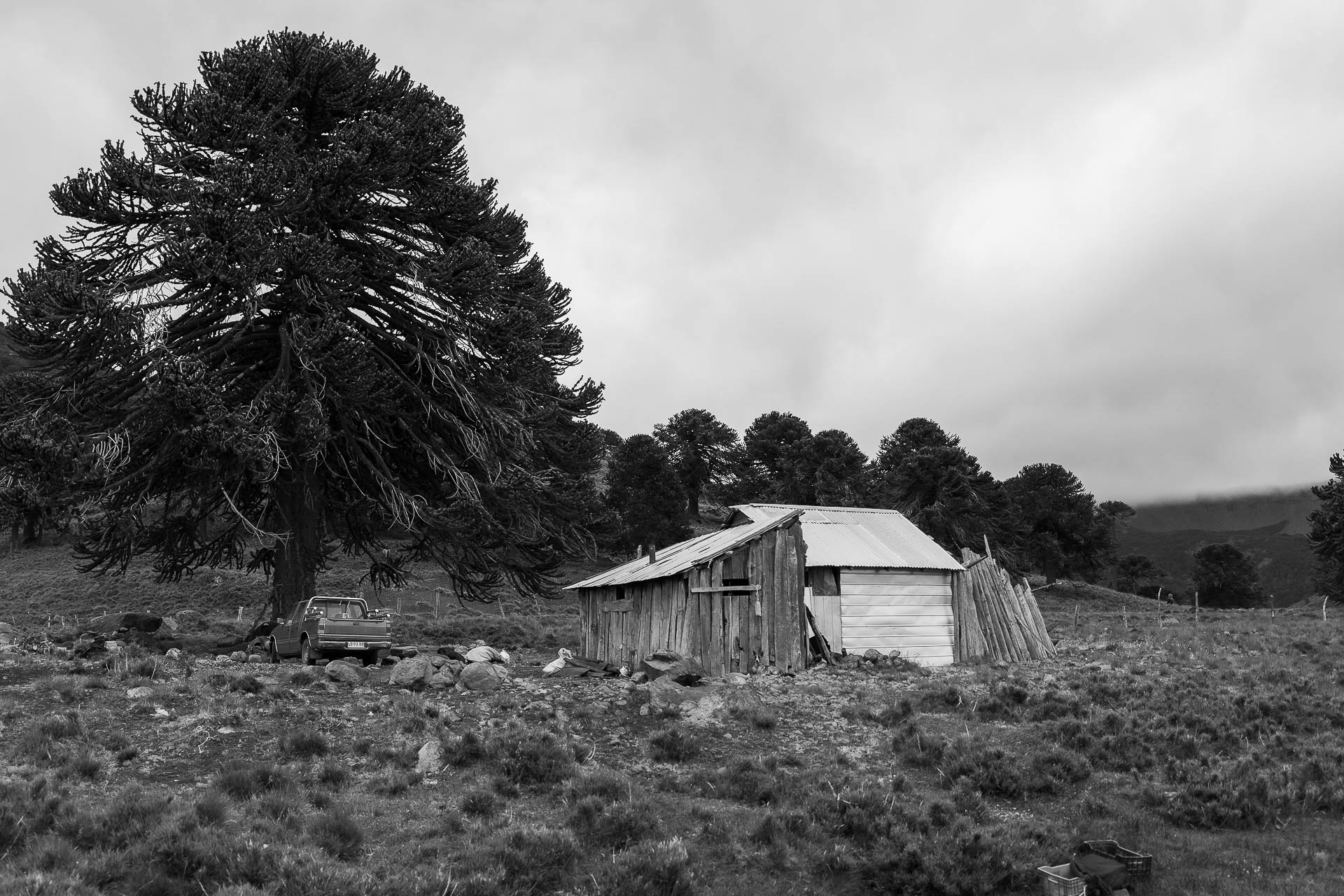
Broader view of la Veranada outpost. Domingo and Fresia spend 5 months here, connected to nature. Every year.
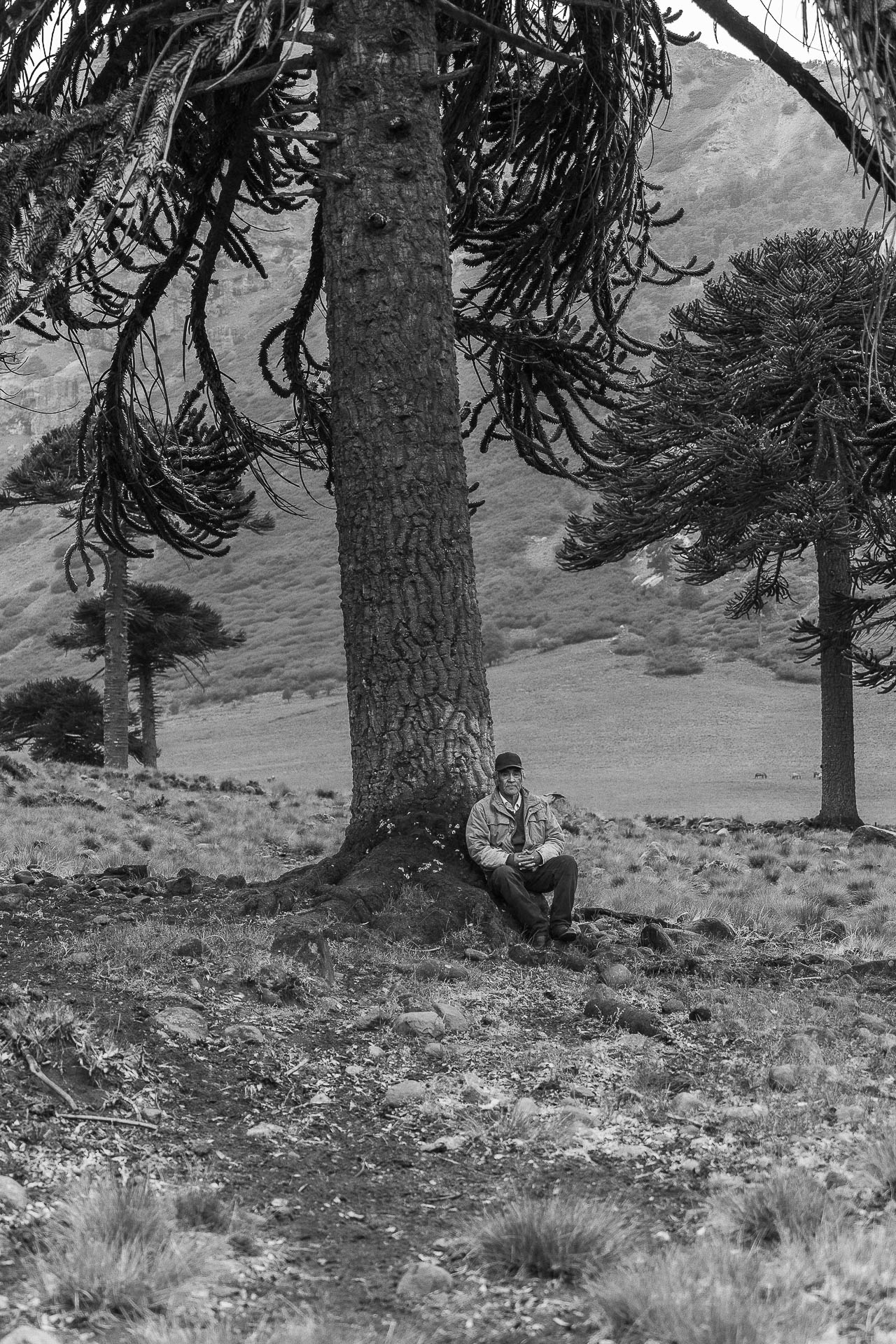
Don Domingo resting under a Pewen tree. They are known as Pewenches, people of the Pewen.
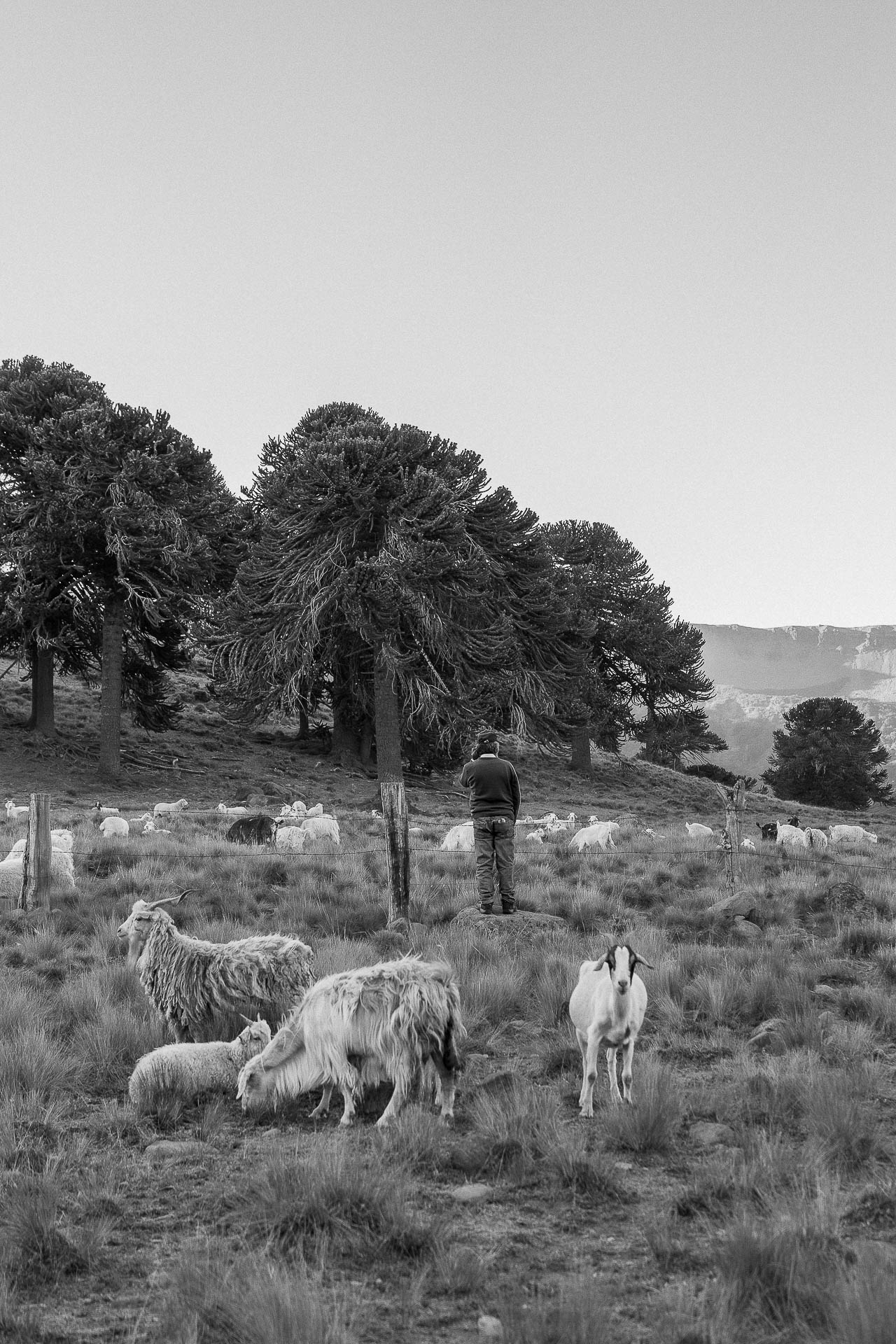
Don Domingo watching the animals in the morning. This is a slow and careful routine that must be followed each day for 5 months.
Don Domingo on his horse. He patrols the surrounding areas to make sure the animals are not attacked or drown in the rivers.
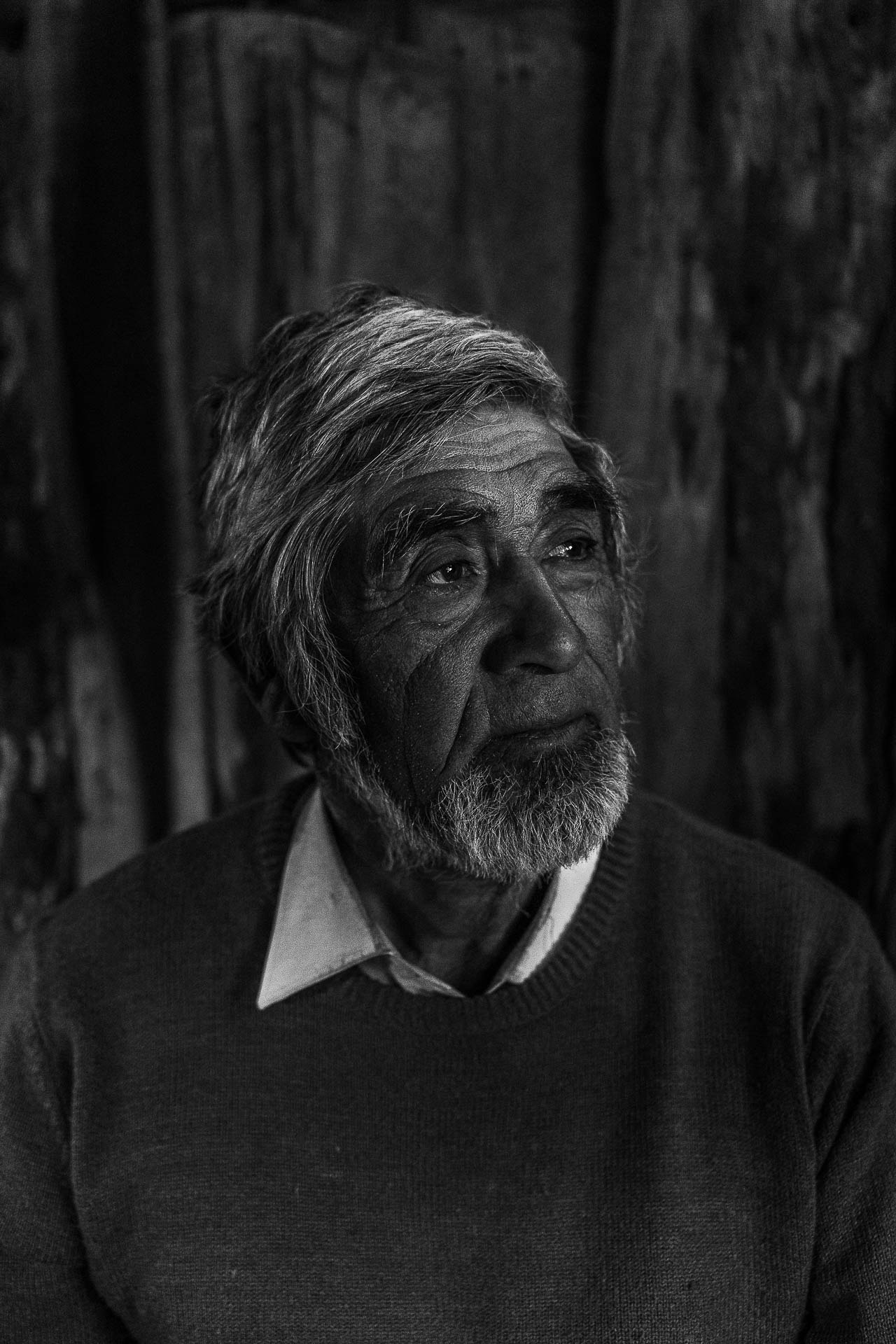
Portrait of Don Domingo after a long day working on the field.
Before going to sleep, Don Domingo makes sure that all the animals are gathered near the Veranada outpost.
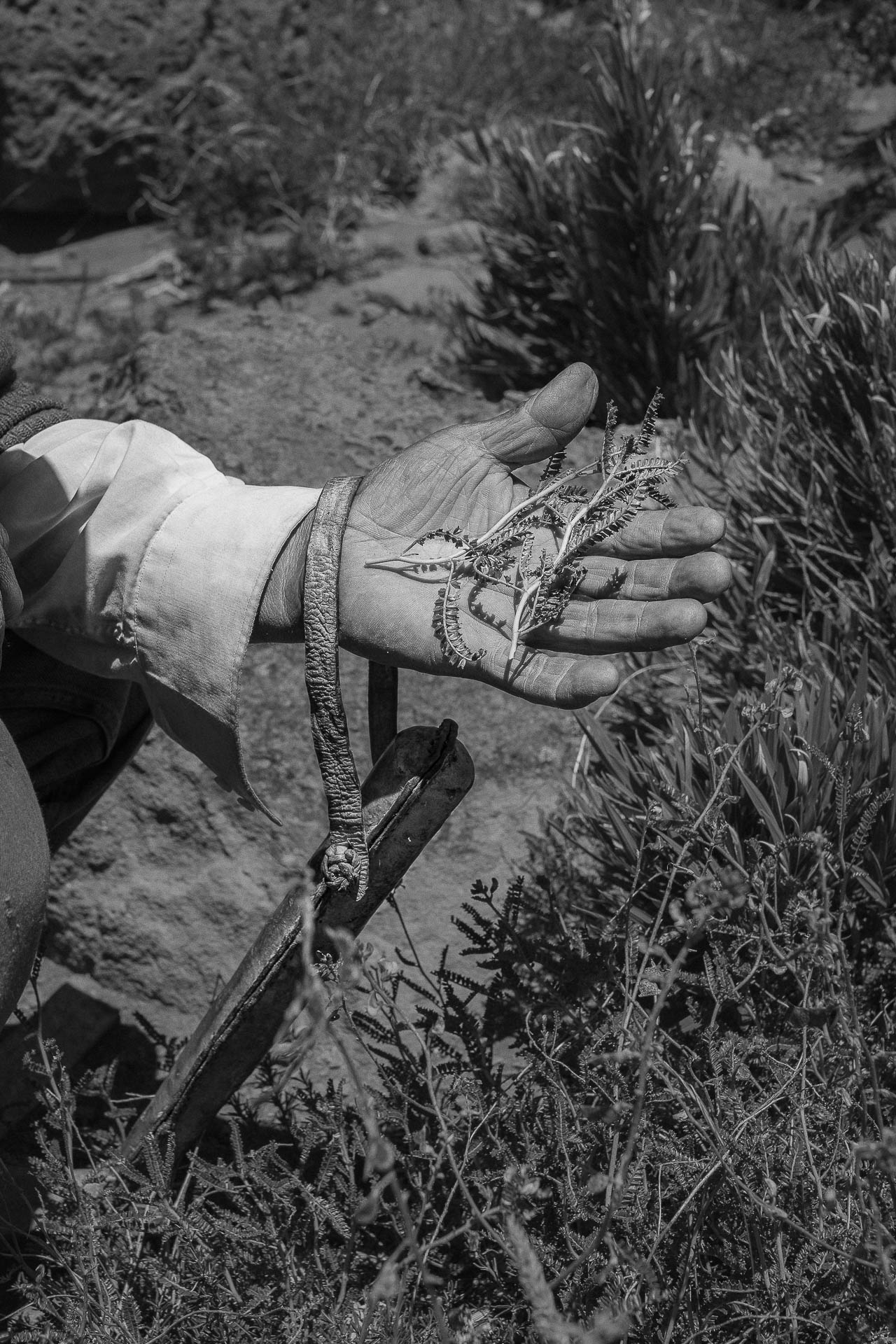
The Pewenche people also collect medicinal herbs that will be used in winter time, when most needed. The Transhumance practices not only provide for meat and an economic activity, it also allows them to collect medicine to stay heathy.

Open Call! Submit Your Work to FotoDoc 2026

Tomas Hernandez

Tomas Hernandez

Born in Santiago de Chile, in 2015 I moved to Chilean Patagonia to work in tourism. I started taking pictures 3 years ago and quickly realized that I'm in a very privilege place surrounded by nature and indigenous communities. I work in the tourism industry and love to deep dive in long form photography documentary to better understand where I live and to pass on and convey urgent message about climate justice, food sovereignty and climate change. I personally think that hope must be depicted to enable positive change in this beautiful world we inhabit.

Related Content

Related Posts

33 Sketchbook
Portfolio

33 Sketchbook

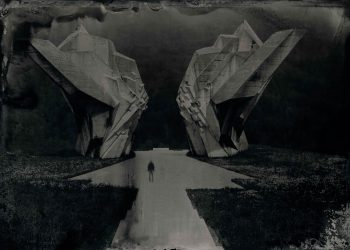
The search for order between humanity and nature has perhaps never been so contradictory and tragic. The pursuit of artificial...

byLászló Gabor Belicza
11 de March de 2026
Within the Same Walls
Portfolio

Within the Same Walls

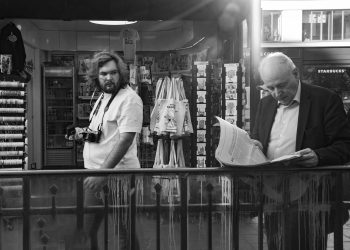
Built during Vietnam’s Subsidy Period (1976–1986), these apartment blocks were designed for collective living at a time when resources were...

byViet Van Tran
10 de March de 2026
Último ensaio antes do palco
Portfolio

Último ensaio antes do palco

Esta coleção de fotografias registra um momento íntimo e significativo: o que é vivido no último ensaio em sala de...

byAna Nicolau
9 de March de 2026
O Avesso do Avesso
Portfolio

O Avesso do Avesso

O que é uma cidade fora de lugar? O avesso do avesso é o que vejo quando caminho pelas pelas...

bySaulo Augusto Jr
6 de March de 2026
Eoeoeo
Portfolio

Eoeoeo

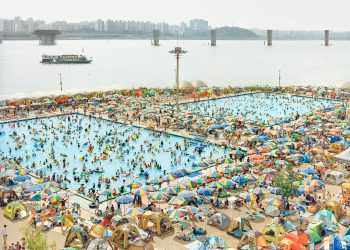
No Chile, a celebração da Independência, que dura quase uma semana, concentrase nas “ramadas”. São construções temporárias, originalmente feitas de...

byAnibal Vivaceta de la Fuente
2 de March de 2026
Círio de Nazaré, Do Sagrado ao Profano: Uma Extensão do Brasil
Portfolio

Círio de Nazaré, Do Sagrado ao Profano: Uma Extensão do Brasil

O “Círio de Nazaré. Do Sagrado ao Profano: Uma Extensão do Brasil” propõe uma imersão fotográfica documental na vivência coletiva...

byFabricio Augusto
27 de February de 2026
  • Home
  • Contest
  • Festival
  • About
  • Portuguese (Brazil)
  • English
No Result
View All Result
  • Home
  • Contest
    • FotoDoc Photo Contest 2026
      • Rules / Submission
      • Selected Entries
      • Guidelines
    • FotoDoc Photo Contest 2025 – Winners
    • FotoDoc Photo Contest 2024 – Winners
    • FotoDoc Photo Contest 2023 – Winners
  • Festival
    • FotoDoc Festival 2025
    • FotoDoc Festival 2024
    • FotoDoc Festival 2023
    • FotoDoc Festival 2022
  • About
  • Portuguese (Brazil)
  • English

Vertente Fotografia © 2023