
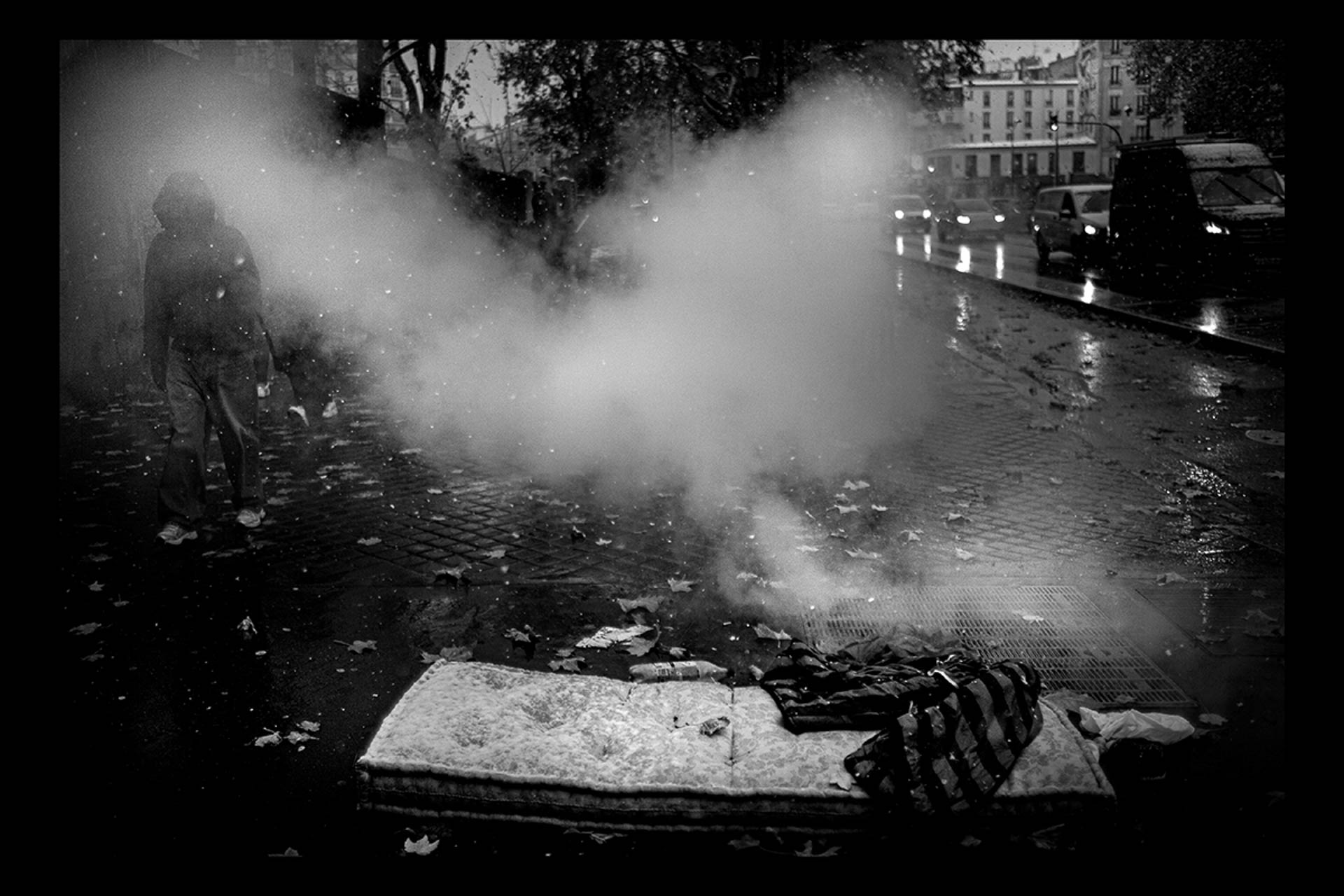

Each day on my way to daycare with my children, I pass a young man living on the street. Over time, I watch him deteriorate, reflecting the collapse of public services, especially in psychiatric care. Through encounters with people like Sophie, Mo, and Samir, this project was born from anger in the face of social inequality and from the need to act. Walking the streets, I photograph those who have become invisible — the forgotten of Paris — in order to bear witness to their presence and their lives.
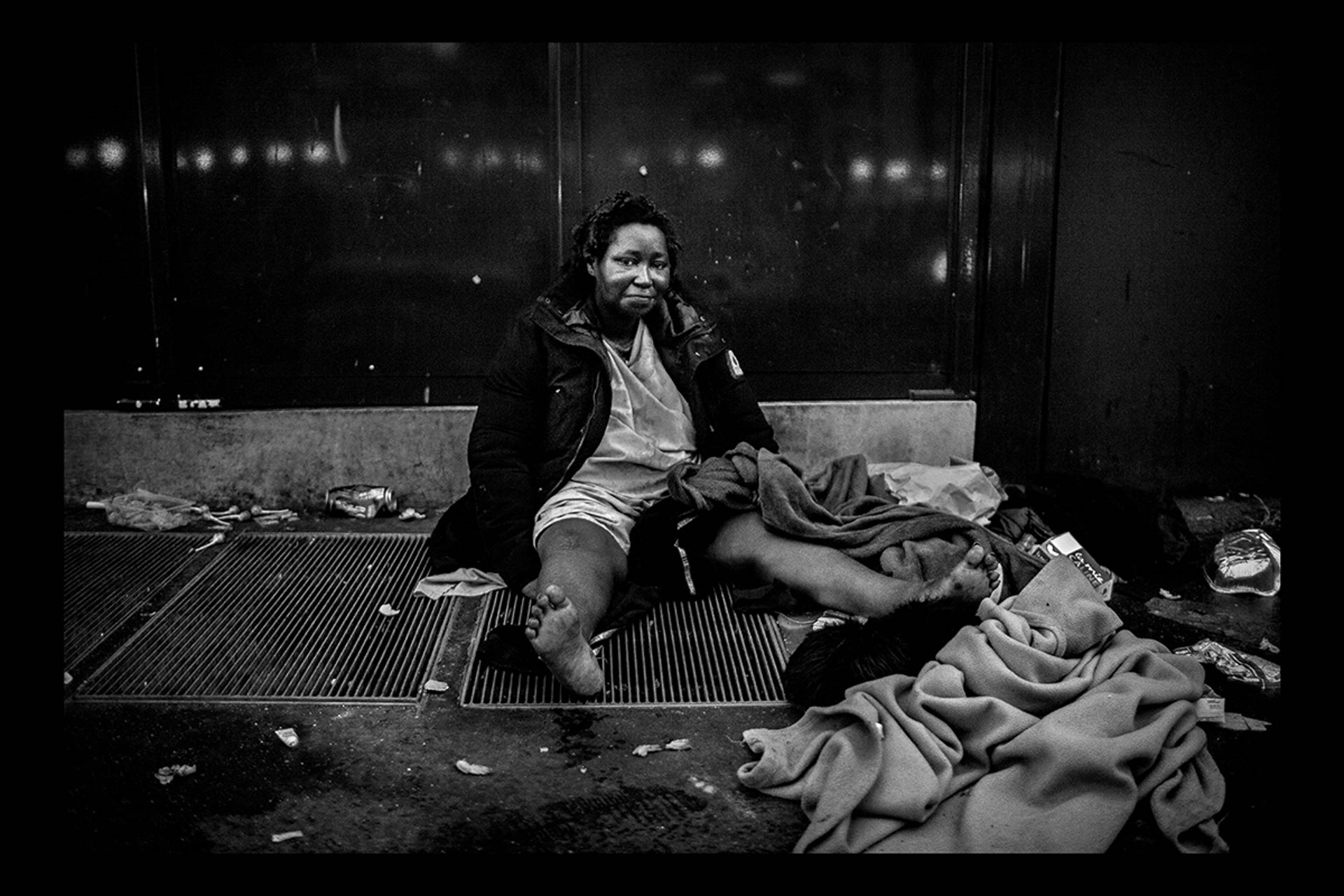
I met Sophie quite early on. I often saw someone sleeping here between the ring road and the tramway.
I didn’t know it was a woman. For a year, I saw Sophie regularly, who sometimes spends a few days in hospital. That day, Sophie talked to me about her faith, the Church of La Chapelle, and her family. She spoke to me in French and English.
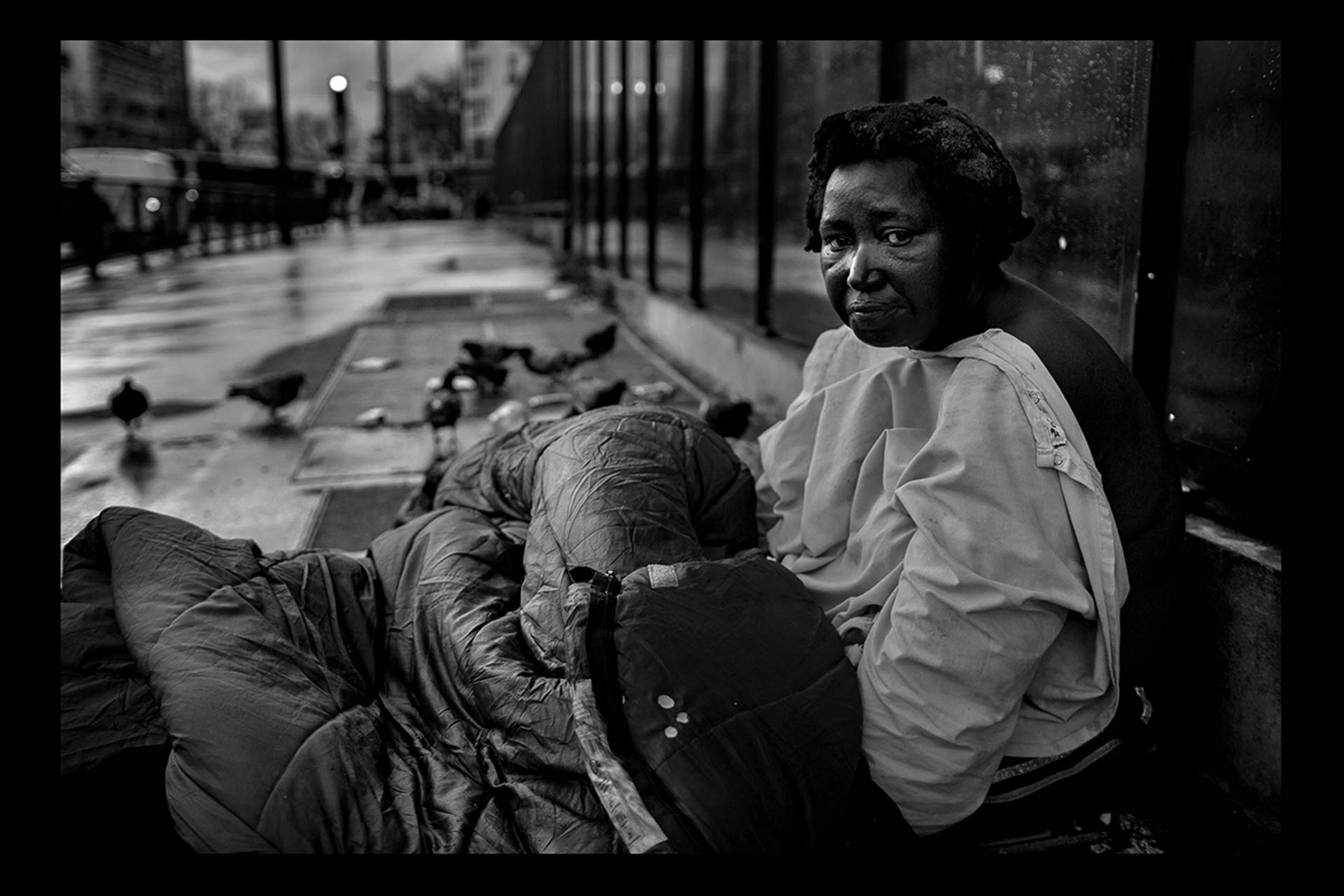
I met Sophie quite early on. I often saw someone sleeping here between the ring road and the tramway.
For a year, I saw Sophie regularly, who sometimes spends a few days in hospital. That day, Sophie is wearing a hospital gown. She looks better than before, yet very quiet. She seems cold.
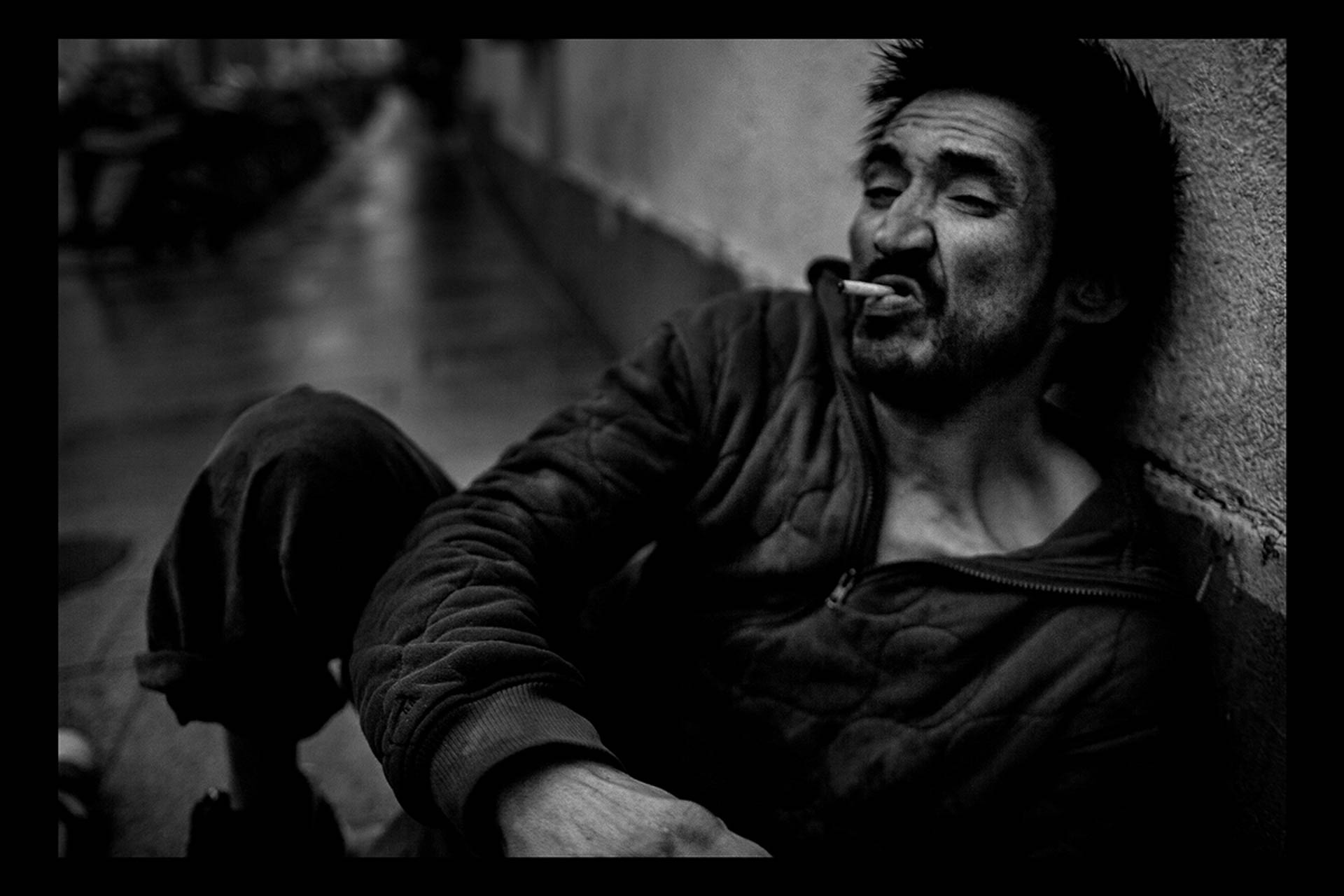
That morning, I see someone lying on the ground in the distance, convulsing violently.
I approached them. The young man sat up, and we talked for a while. He asked me if I had any coffee. He kept repeating, “Coffee is good, I like coffee.” He was shaking a lot and couldn’t control his movements. We talked a little without really understanding each other, and I took two portraits. He thanked me for my kindness. I left.
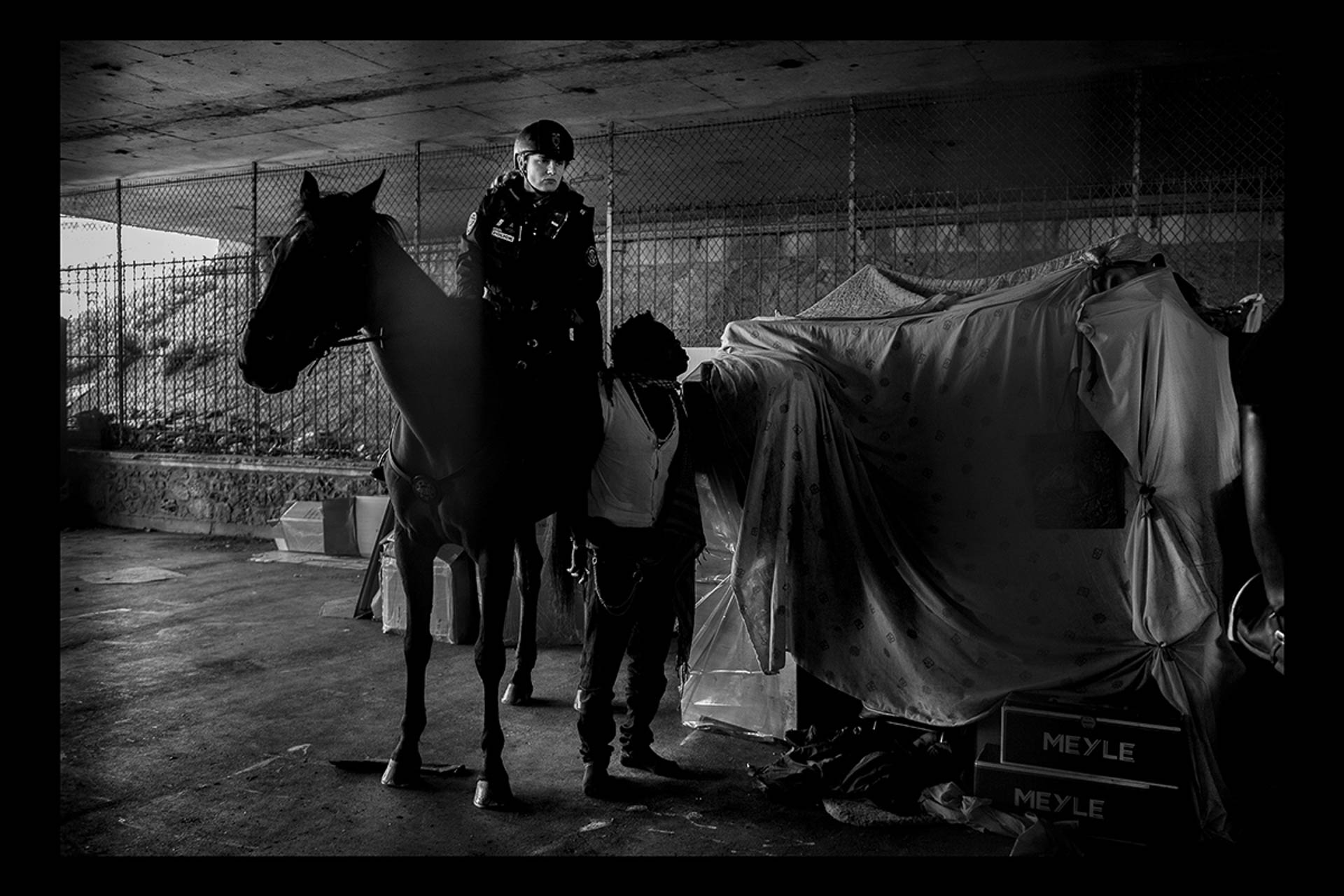
I met Mo, who dreams of finding work in mechanics. He told me his story; we sat next to his shack under a bridge. He’d been living on the street for several months. He was arrested by the police “by mistake.” He disappeared for quite some time. Here, Mo is being arrested by the mounted police. I’ve known Mo for some time. He doesn’t know why he’s being arrested. ‘Why are they arresting me?’ he asked me. ‘But I don’t know — I really don’t know…’ »
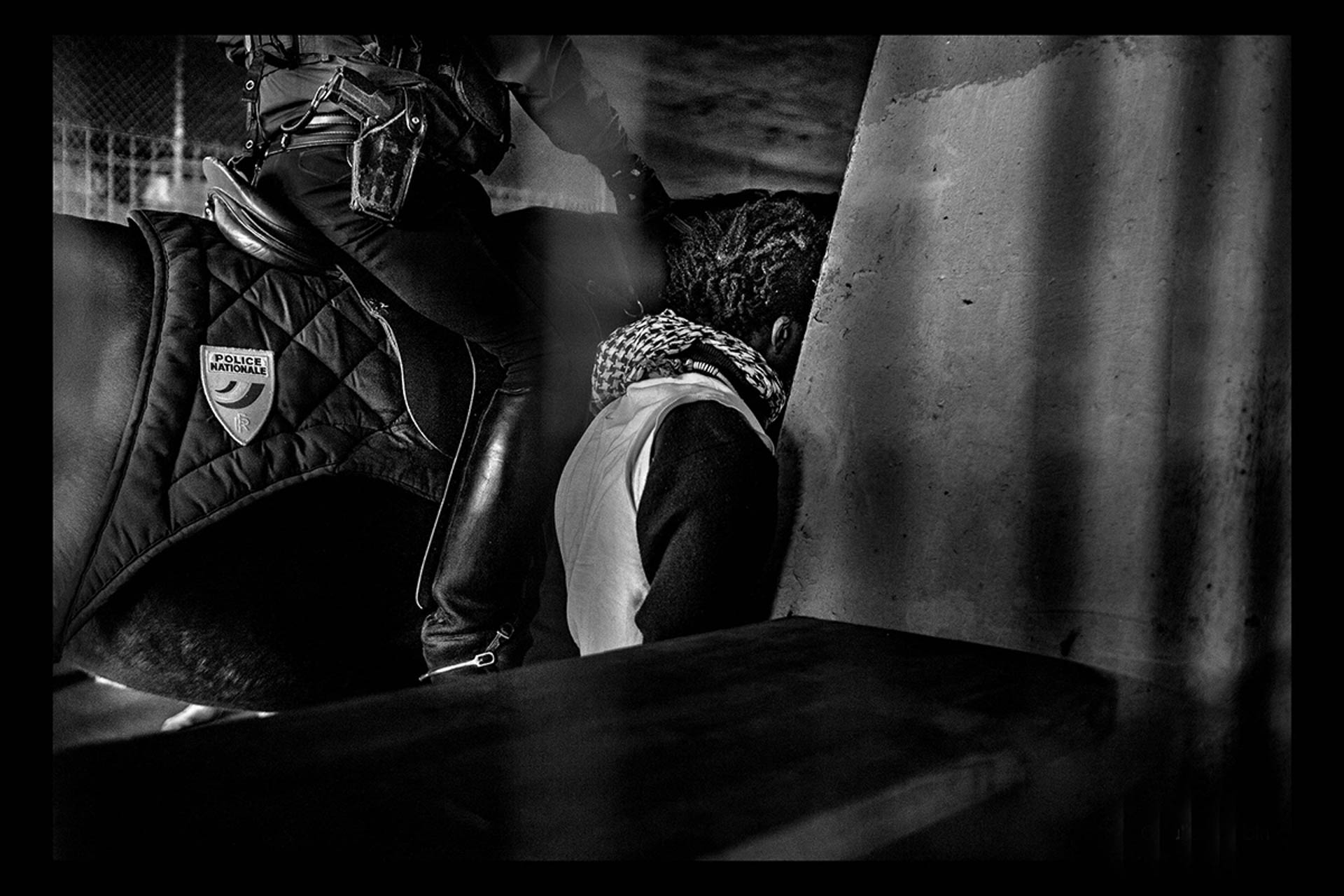
I met Mo, who dreams of finding work in mechanics. He told me his story; we sat next to his shack under a bridge. He’d been living on the street for several months. He was arrested by the police “by mistake.” He disappeared for quite some time. Here, Mo is being arrested by the mounted police. I’ve known Mo for some time. He doesn’t know why he’s being arrested. ‘Why are they arresting me?’ he asked me. ‘But I don’t know — I really don’t know…’ »
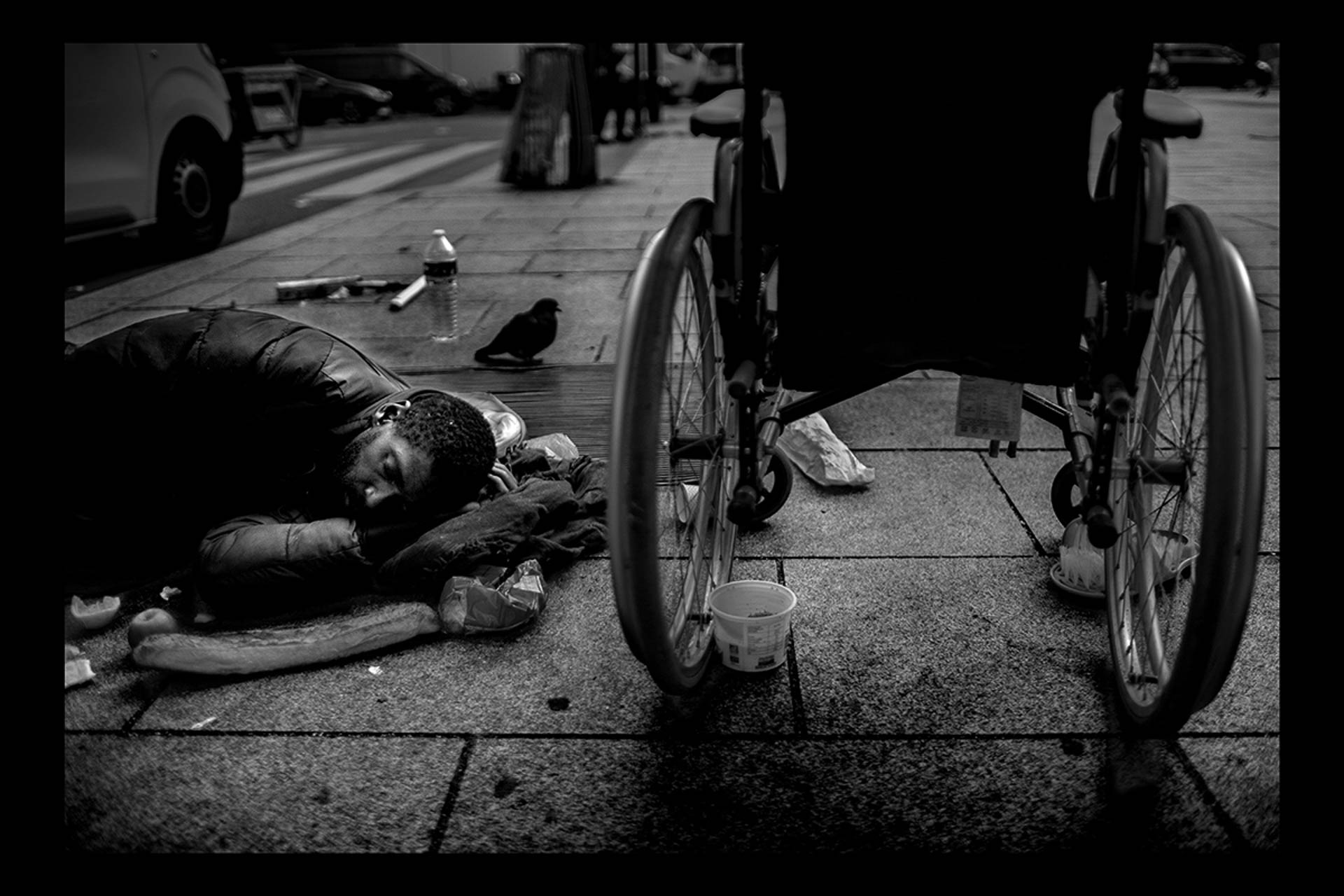
Near the Porte d’Aubervilliers in Paris, I meet people who have just been discharged from hospital after a few days. Most of the time, I find them Asleep near the tram tracks.
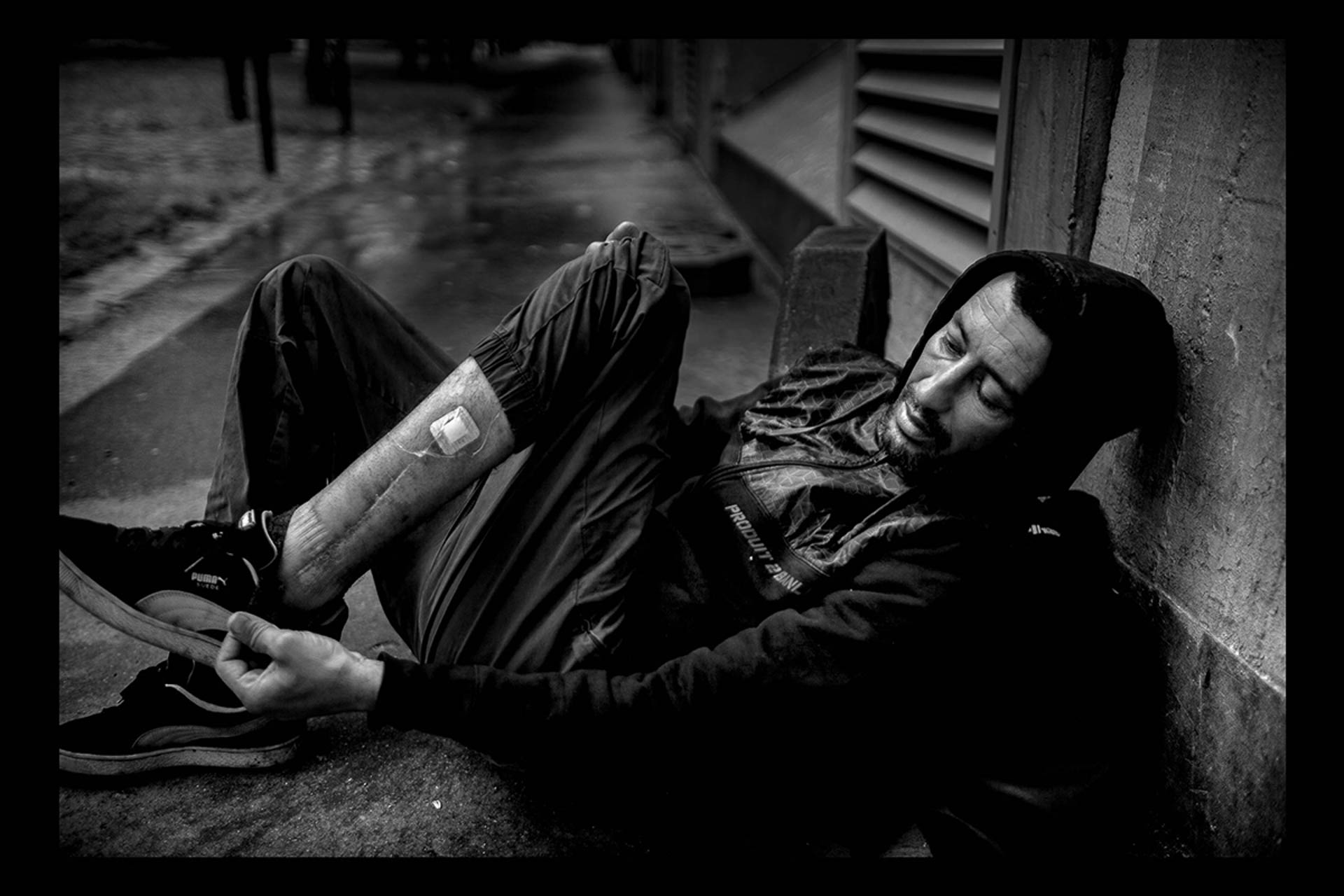
When I met Samir, he hadn’t spoken to anyone for three days. He was happy to meet someone to talk to. He told me that he had been living on the streets for four months. Since his injury last year, he hasn’t been able to find work. Very quickly, everything fell apart, and he left his apartment to live outside. This morning, he was waiting for a « Caarud » to open so he could get a coffee and warm up.
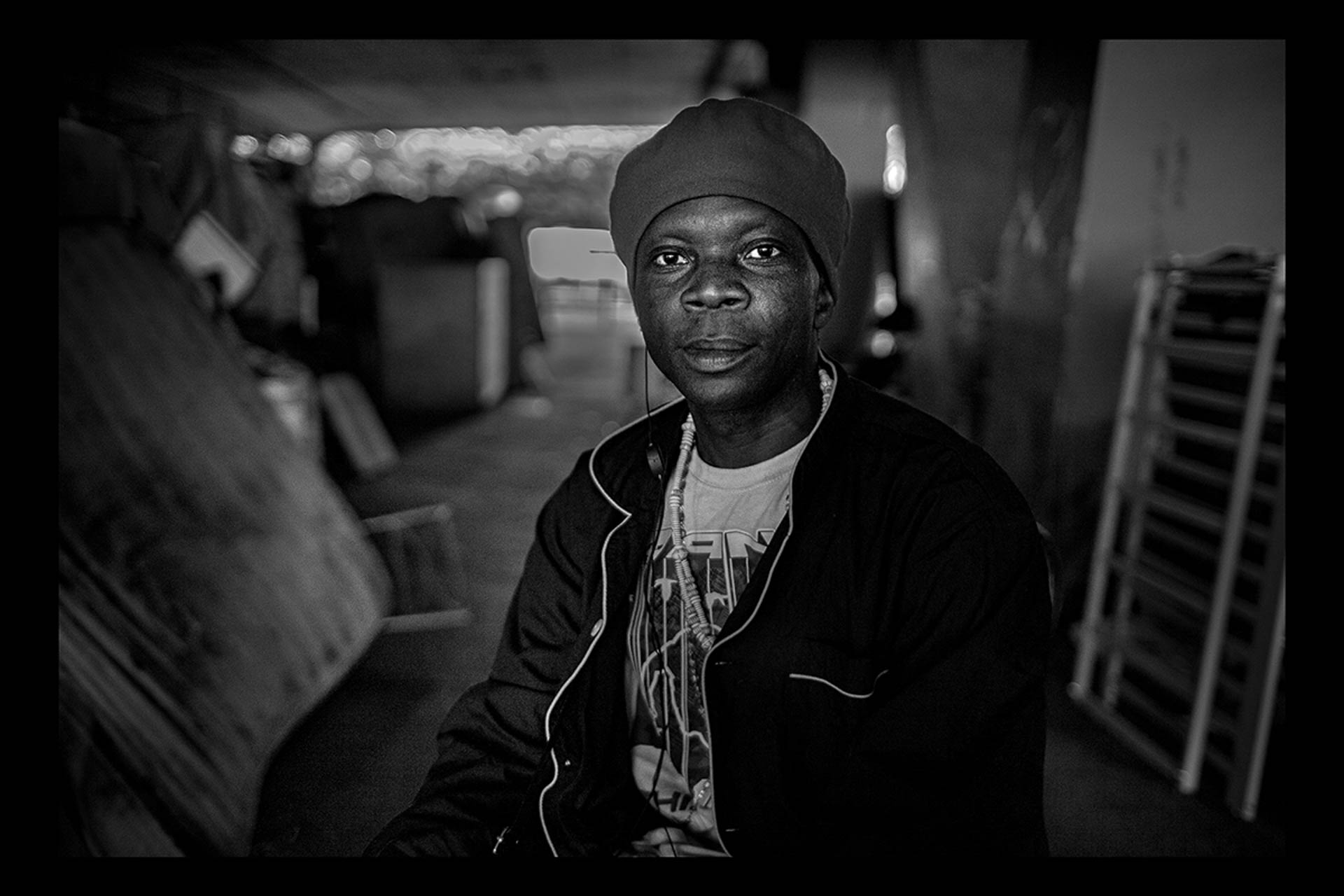
That day, I finally saw Mo again after his arrest. He told me a lot about his father and his country. We sat at the door of his hut under the bridge. He often repeated the phrase, “It’s a difficult life,” “It’s a difficult life.”
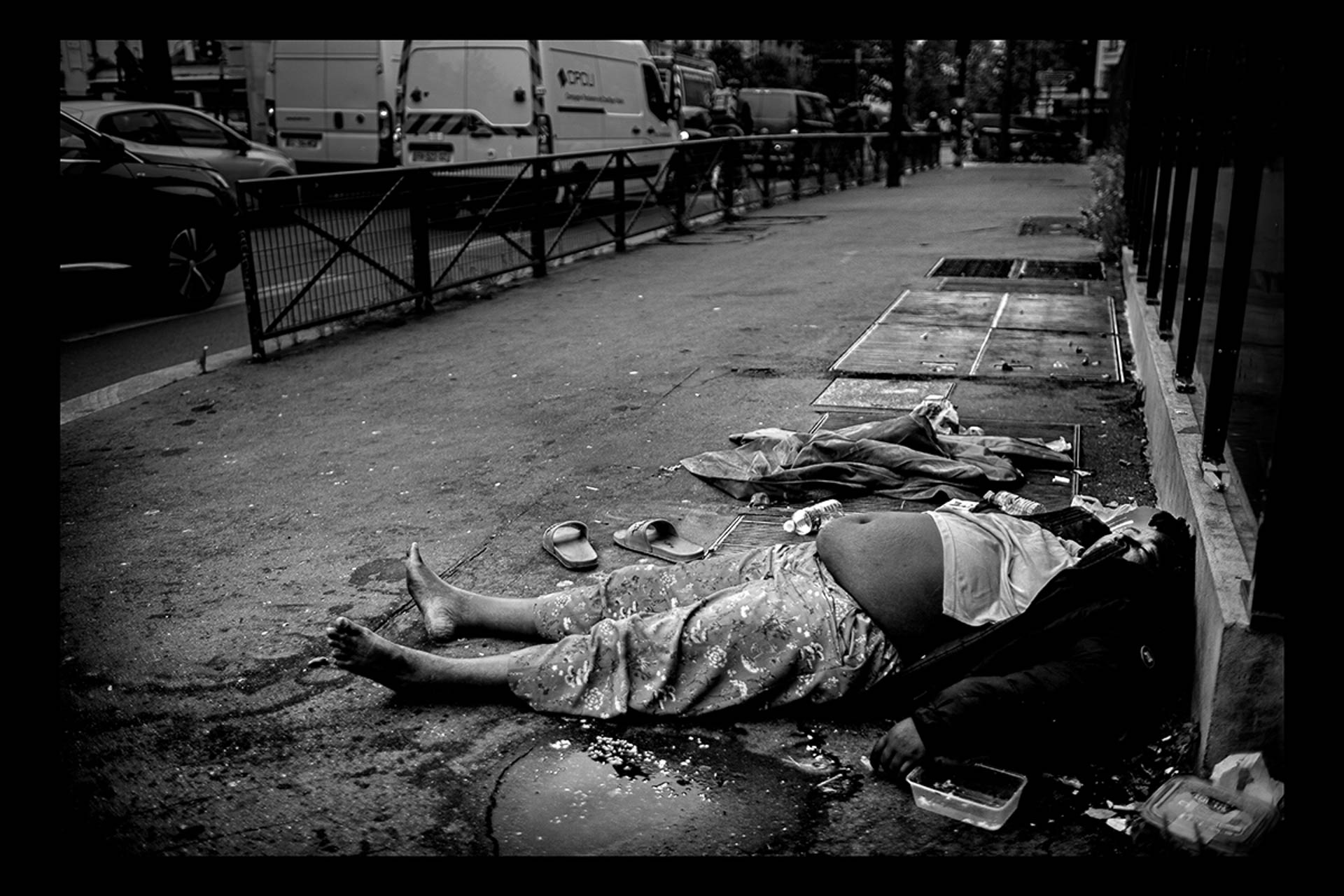
Sophie sometimes sleeps a lot during the day. She has already made it clear to me that “at night, there are men.”
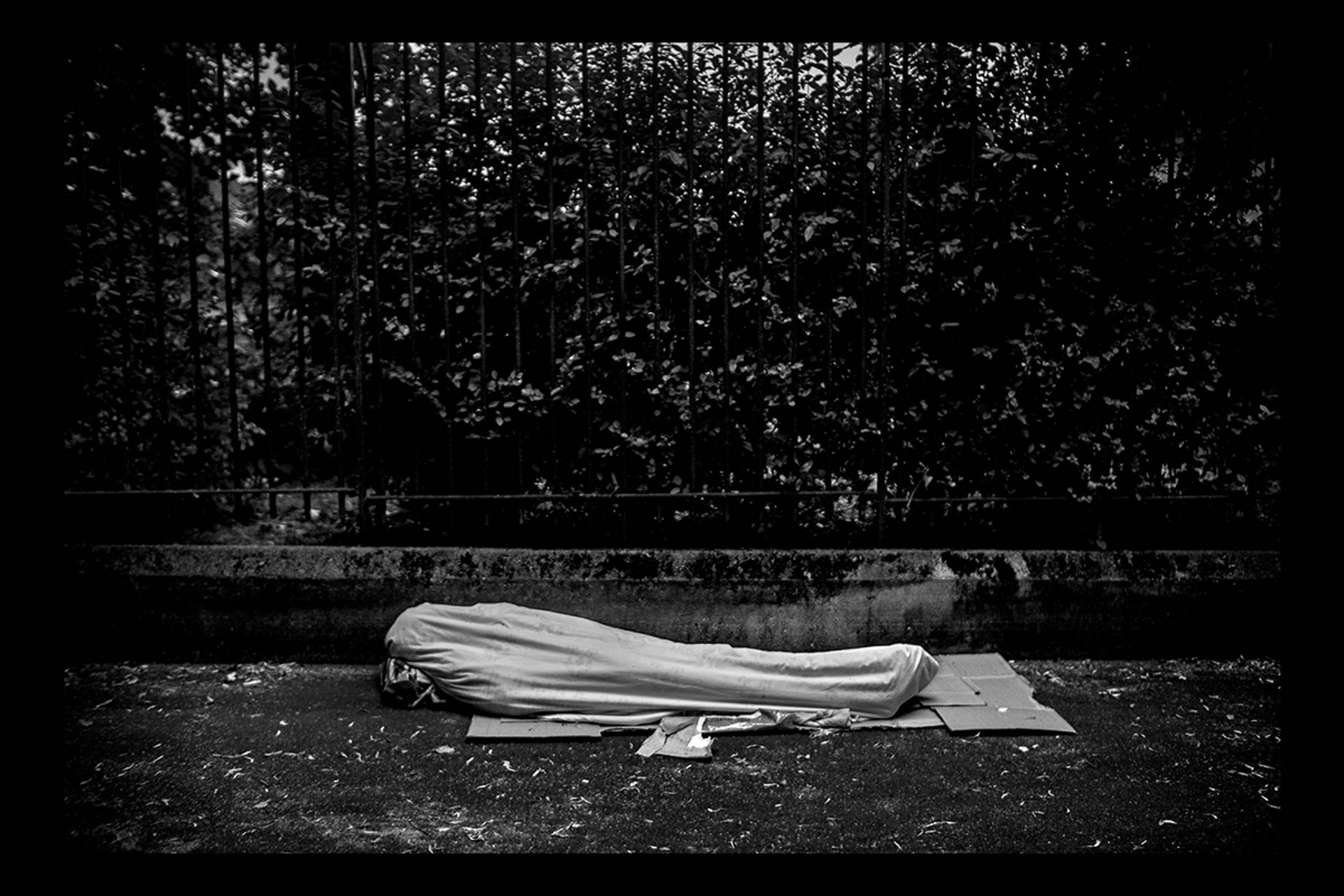
This morning I was walking to meet “Momo,” who lives under a bridge near the Poissonniers stadium in Paris.
I walked past someone I hadn’t even seen. I took a few steps back. It was raining cats and dogs, and there he was, under a simple sheet, soaked, alone, invisible.
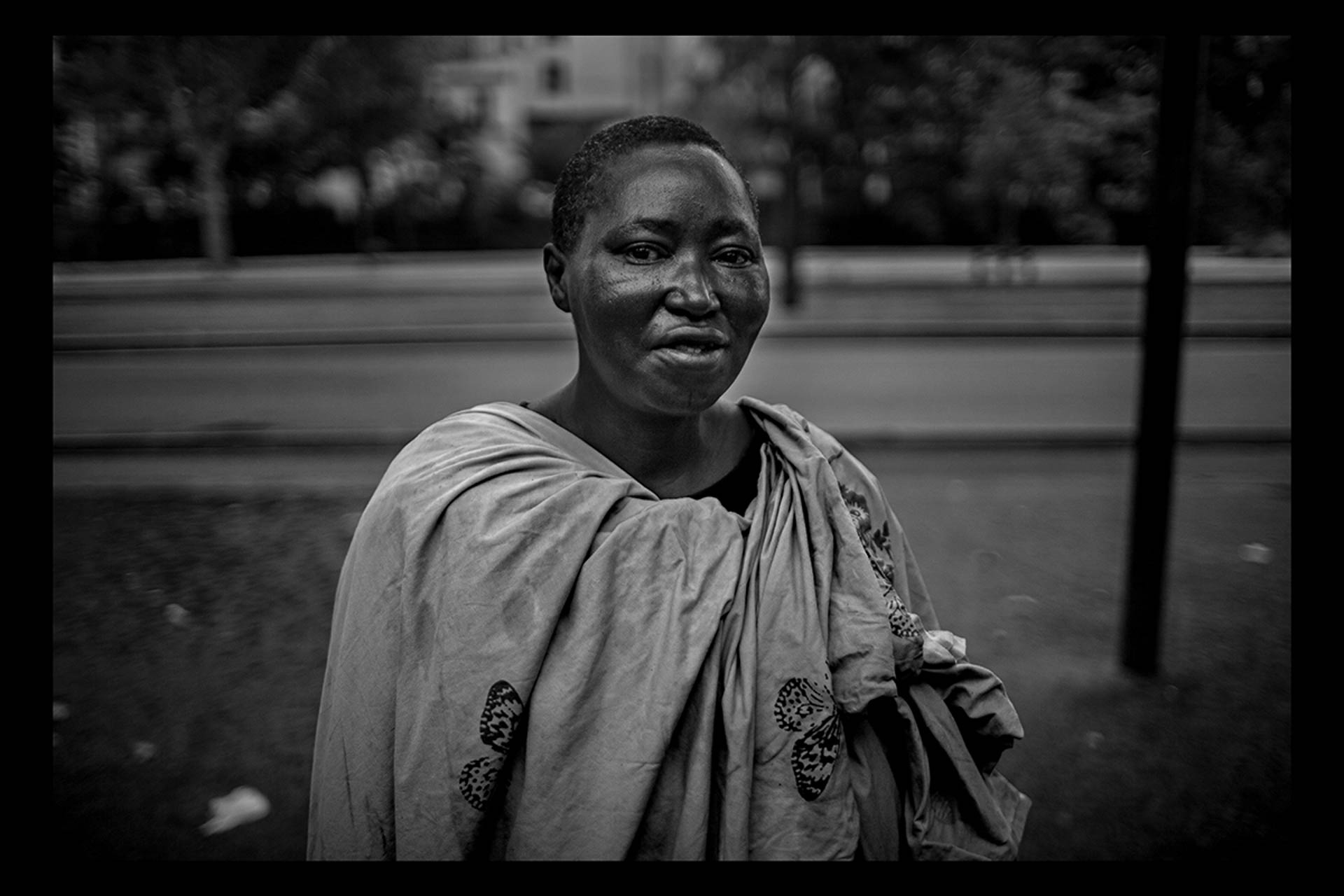
I hadn’t seen Sophie for months. While I was photographing a building, I sensed a presence behind me. It was her. We talked, and Sophie told me she couldn’t live at home “because there’s a devil in my house.”
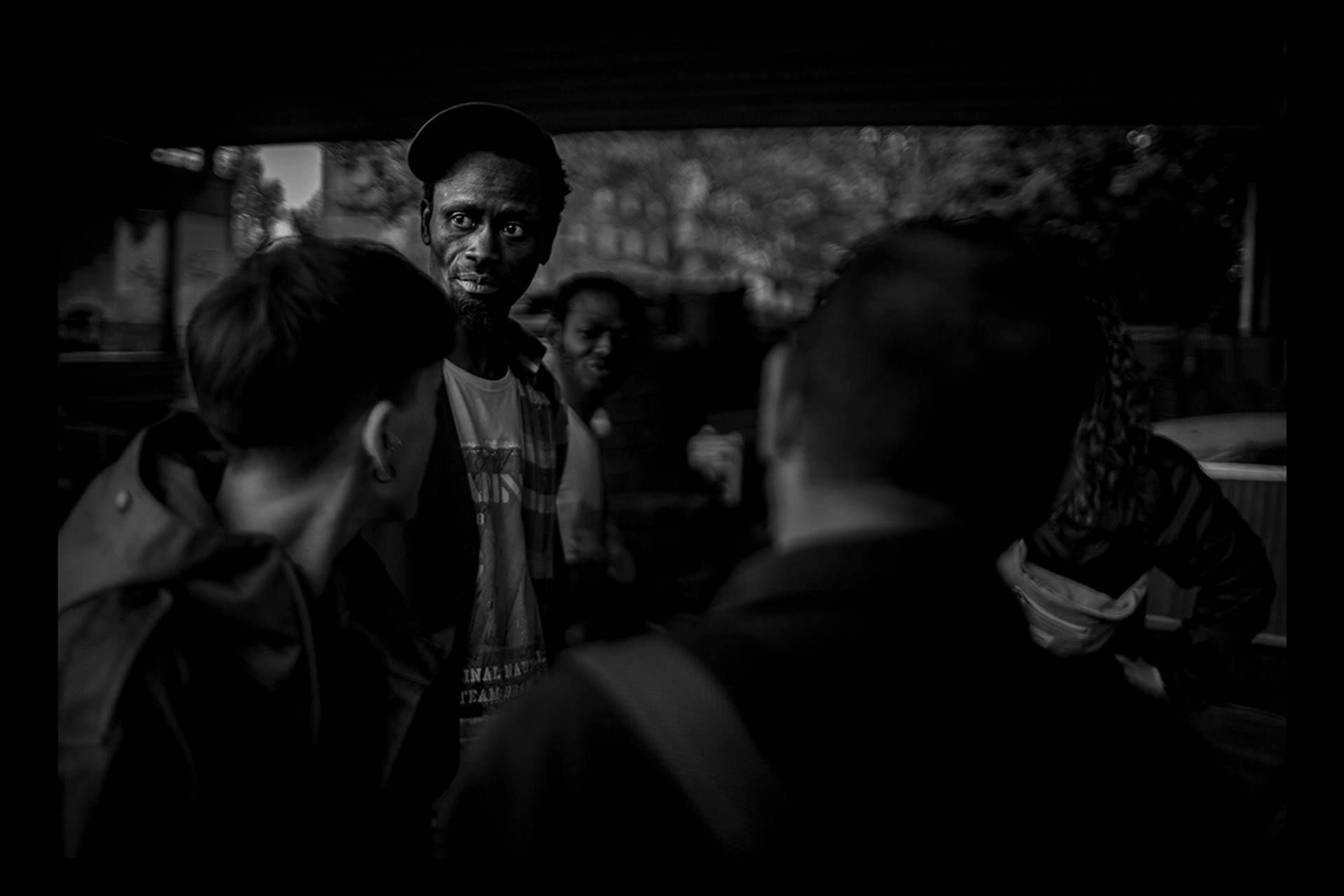
I have known Momo for almost a year. It took him a long time to agree to let me photograph him. We would go for walks and he would introduce me to people on the street. One day I arrived and he didn’t look well. He said to me, “I’m going to show you something.”
Under the bridge, his tent, the others’ tents, and lots of belongings had been burned. A woman had been arrested for setting fire to the bridge to kill them, and everything had burned down. He wasn’t there at the time, so he escaped unharmed. You can see the fear and terror in his eyes.
An organization was there to find a solution.
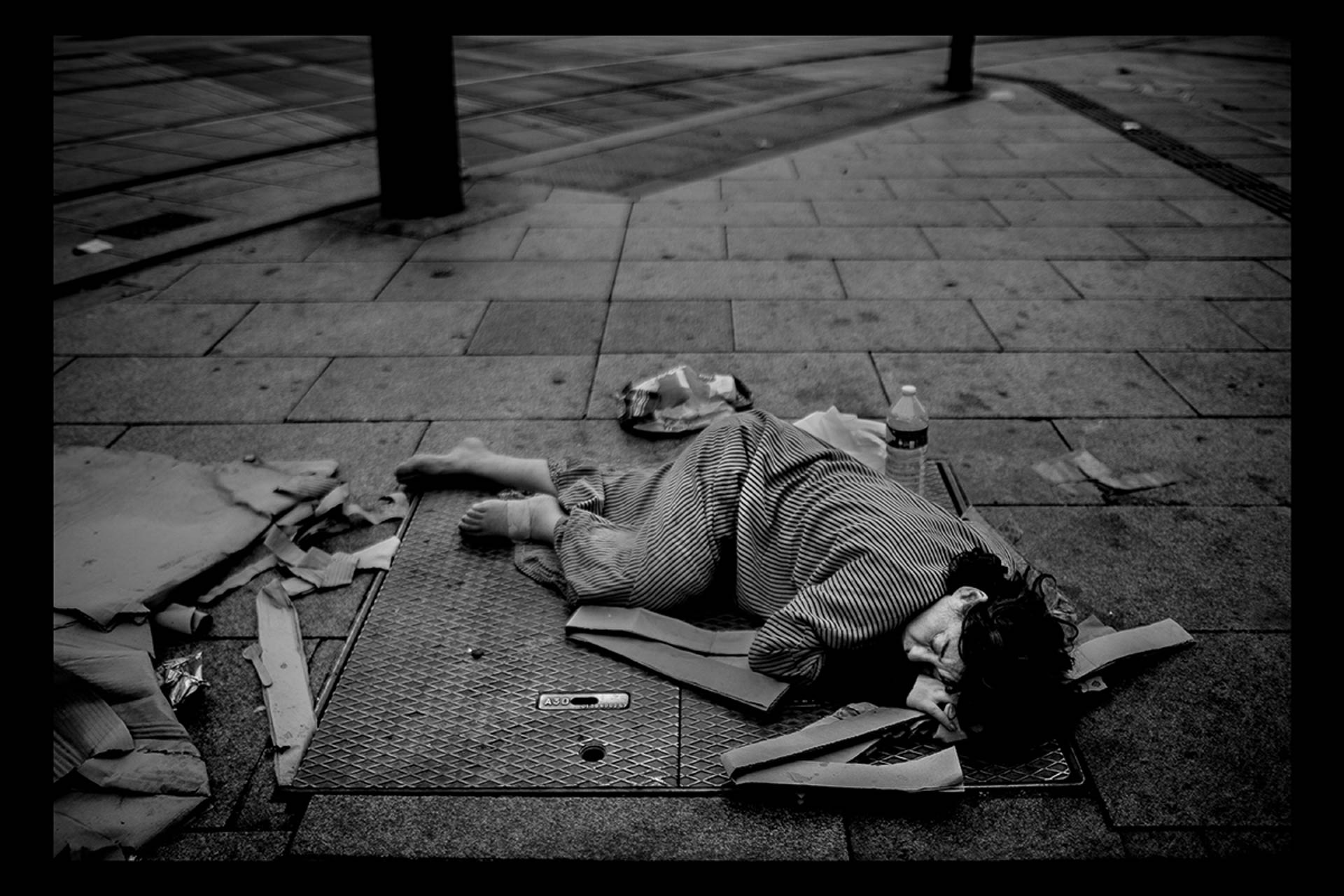
Near the Porte d’Aubervilliers in Paris, I meet people who have just been discharged from hospital after a few days. Very often, they are still wearing their name tags and hospital gowns. Nothing else. Most of the time, I find them asleep near the tram tracks.
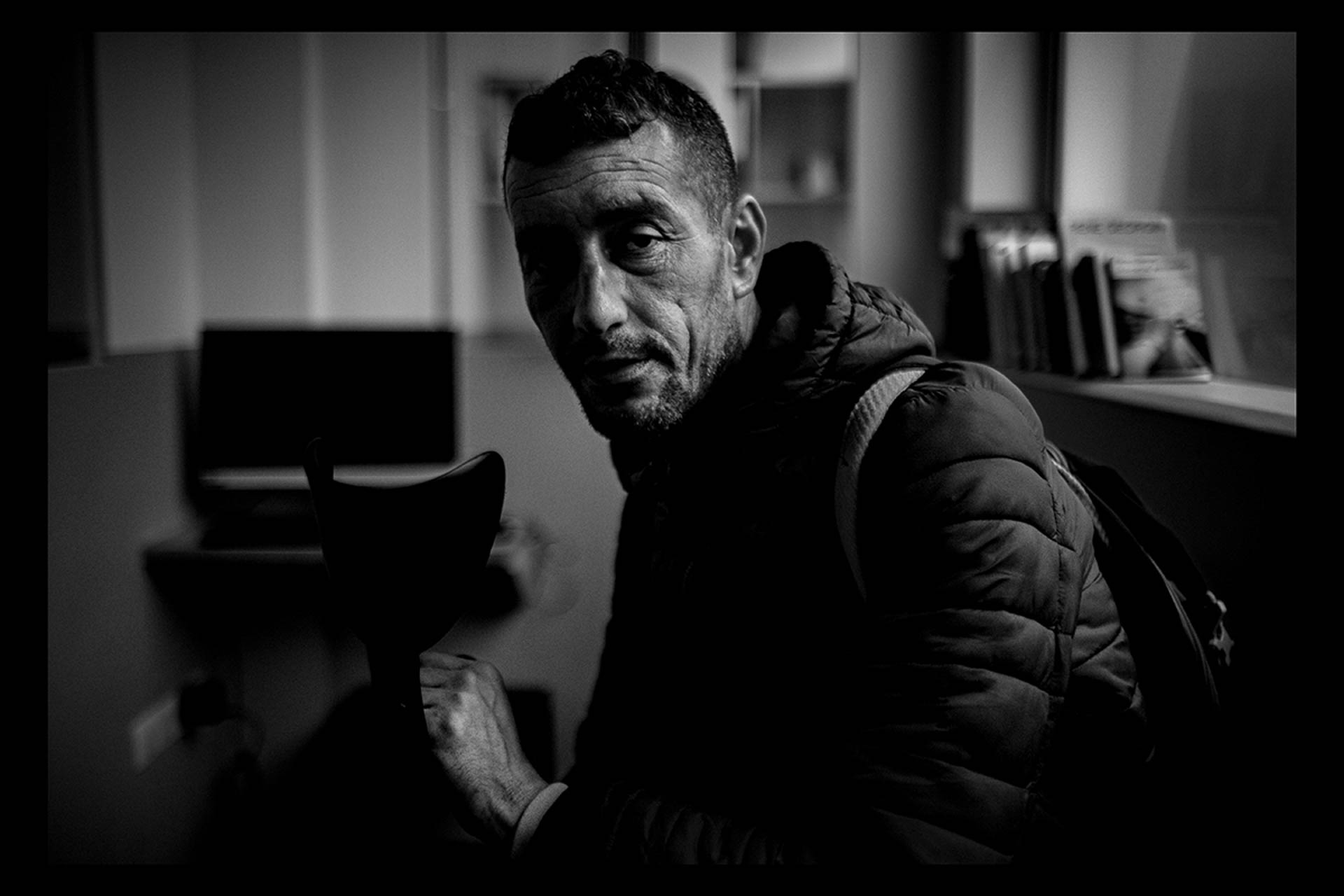
I saw Samir again several weeks after our first encounters. I ran into him one evening on the street. He was in good shape; an association had found him temporary housing. He had come to say hello to my son and me in the neighborhood. For weeks, I lost sight of him completely.
On the day this photo was taken, Samir had become sad again and had fallen back into alcoholism. I didn’t know it yet, but it was the last time I would see him. Months later, I learned that he had left for Germany, apparently.